Vintages in Wood
Cask & Climate
The 2012 vintage from Bielle spent seven years in cask before being bottled at cask strength, 54.6 percent. Besides white rum, Marie-Galante also produces aged bottlings: Père Labat released a 1983 vintage, and Bellevue offers rums aged between three and twelve years.
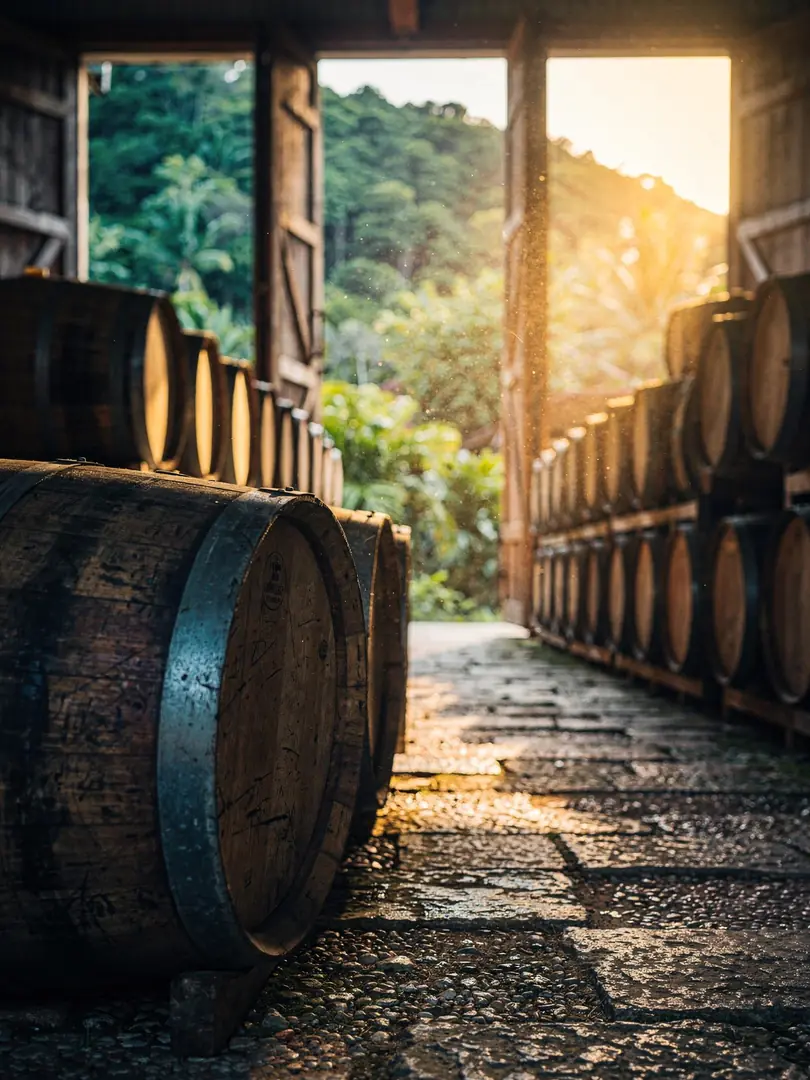
Aging takes place in wooden casks, which Bielle states are stored in cellars. Guadeloupe's regulations provide for three categories: blanc for unaged rums, élevé sous bois for rums that have rested in wood, and vieux for older ones. Some houses use the trade term ambré for lightly aged rums, though it is not a protected designation.
The climate of the Antilles shortens the waiting time. In the Antilles, annual evaporation from the cask is often around eight percent—many times the Scottish figure. In exchange, the rum picks up color, vanilla, and spice from the wood more quickly. The so-called tropical year, said to equal three European years, is mostly a marketing claim and not something that has been measured.
If an age statement like "8 ans" appears on the bottle, EU rules require that it refer to the youngest component of the blend. No drop may be younger. Père Labat bottles an eight-year-old rum at 42%, an example of the island's calmer, drinking-strength side.
Cask strength, in French brut de fût, means bottled without added water, exactly as the rum emerges after its years in cask. At Bielle, such bottlings sit at around 54 to 55 percent. They retain the power of the young spirit while carrying the spice of the wood that the Blanc lacks.