Pepperpot and Rum Shops
Food & Drinking Culture
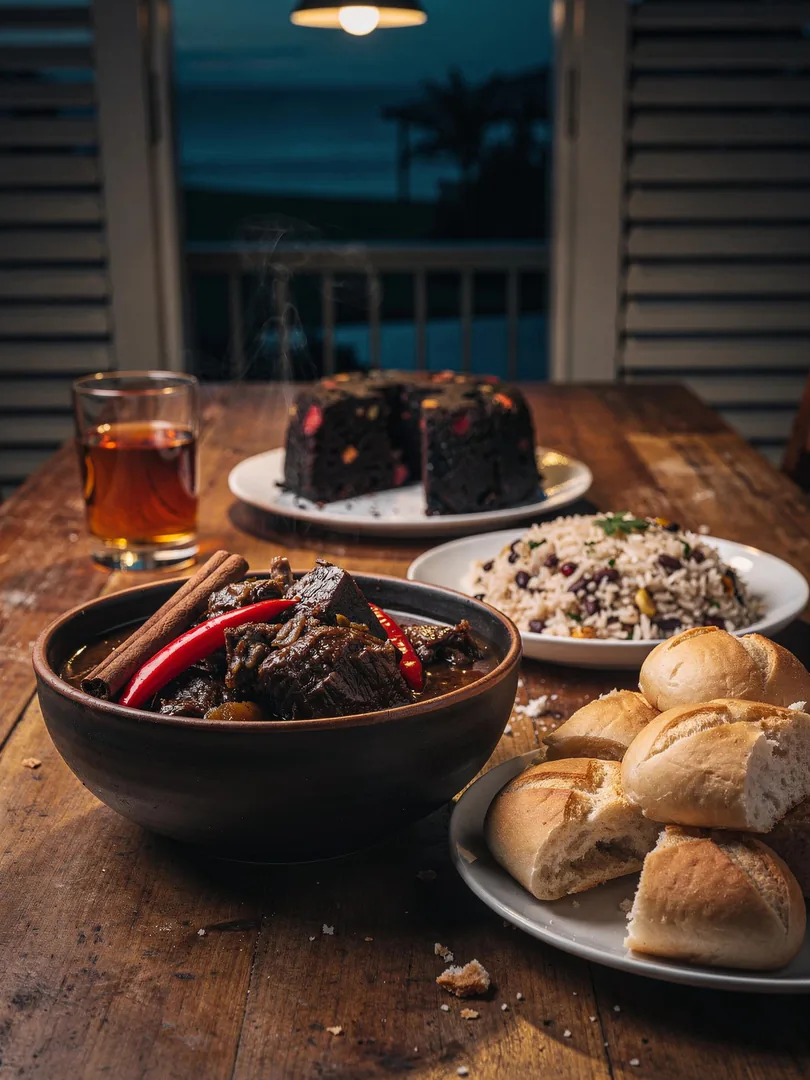
Guyana's best-known dish is Pepperpot. Meat, often beef or pork, is slow-braised for hours with cinnamon, cloves and hot chilli, in cassareep — the boiled-down juice of bitter cassava. Cassareep comes from Indigenous cuisine, turns the stew almost black, and keeps it preserved. It's a Christmas morning staple, served with bread.
Cook-up Rice is the dish for Saturdays: rice, beans or peas, coconut milk and meat all in one pot. Metemgee is a stew of root vegetables, plantain and coconut milk, served with small flour dumplings. Both are filling, and rum tends to take a back seat here, if it features at all.
Indian-influenced cuisine brought roti and curry, which descendants of the indentured labourers still keep alive today. Freshly made flatbread with a spicy chicken or chickpea curry pairs well with a rum rich in wood and spice, since both can stand up to heat and richness.
Black Cake at Christmas is a dark fruit cake. Raisins and dried fruit are soaked in rum and wine for weeks, sometimes months, before going into the batter. This is what gives it its deep colour and a flavour close to that of an aged rum. In many families, the recipe is a closely guarded secret.
Rum shops can be found in almost every town. They're gathering places where people sit, play dominoes, and chat. In February, Guyana celebrates Mashramani, marking the anniversary of the 1970 republic, with parades, music and costumes. Indian festivals such as Phagwah and Diwali are equally part of the calendar. Cocktails play a smaller role in these gatherings than the rum being poured.