Tar, Smoke, Fruit
Tasting
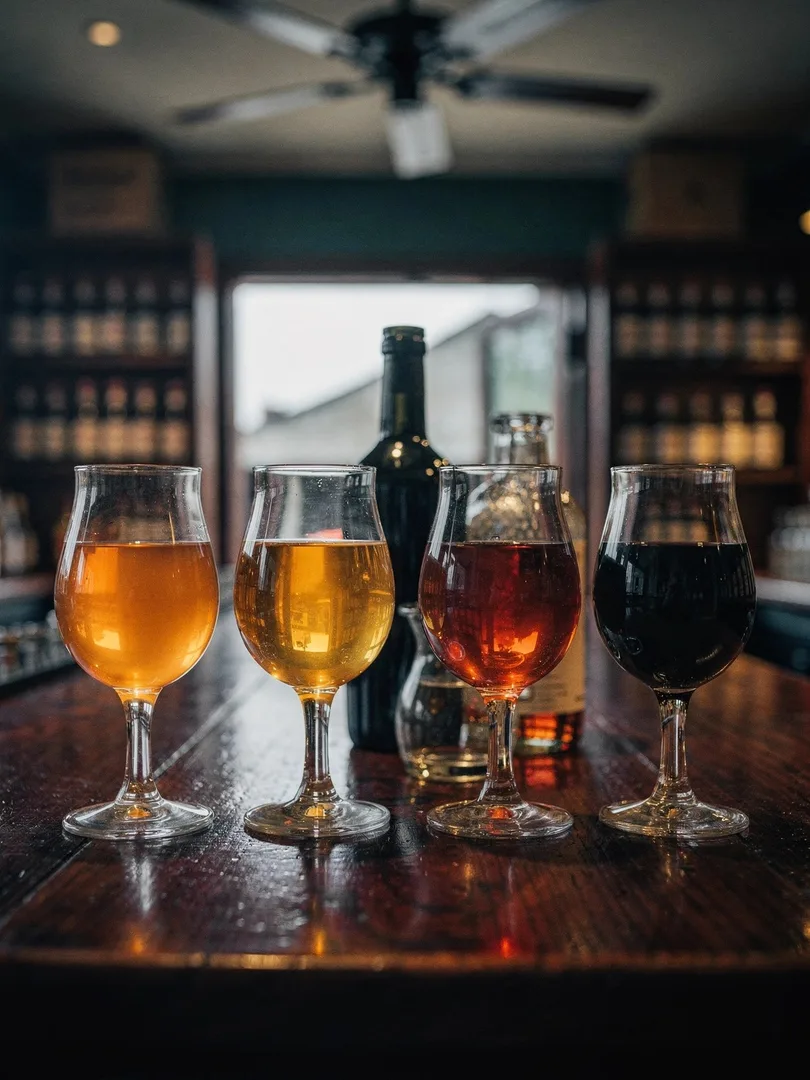
On a wooden bar sit four glasses, each with a measure of dark rum: Port Mourant, Versailles, Enmore and Uitvlugt. Each glass has its own signature, and smelling them side by side reveals what a marque really is. The comparison works best with a nosing glass that narrows at the top to concentrate the aromas. The rum should be at room temperature.
Port Mourant, to many noses, smells of tar, dark fruit, and an oily, dense depth that lingers long in the glass. Tasters also mention liquorice and smoke. Well-known are single-cask bottlings from independent bottlers, such as a 1990 Port Mourant from James MacArthur, still sought after by collectors today.
Versailles often comes across as drier and more austere, with wood, tobacco, and fruit that leans more toward dried fruit than fresh. From Uitvlugt there are bottlings from the Savalle, such as a 1998 Uitvlugt from Silver Seal. It is lighter, spicier, and leaner than the wooden pot still rums.
Enmore, known as EHP, has a Velier bottling released simply as Enmore, showing leather, liquorice, and dried fruit. The Coffey still produces a rum that's lighter in weight yet still full of character. Compare two marques side by side and it becomes clear immediately: this isn't about sweet versus dry, but about density.
Neat, the rum shows its character most clearly; a few drops of water open it up at higher strength. Fruit and wood then come forward more, while the burn on the palate eases. A single sip is enough to recognise a marque's line. For those who want to explore further, take your time and hold the glass still.