Heat in the Cask
Cask & Climate
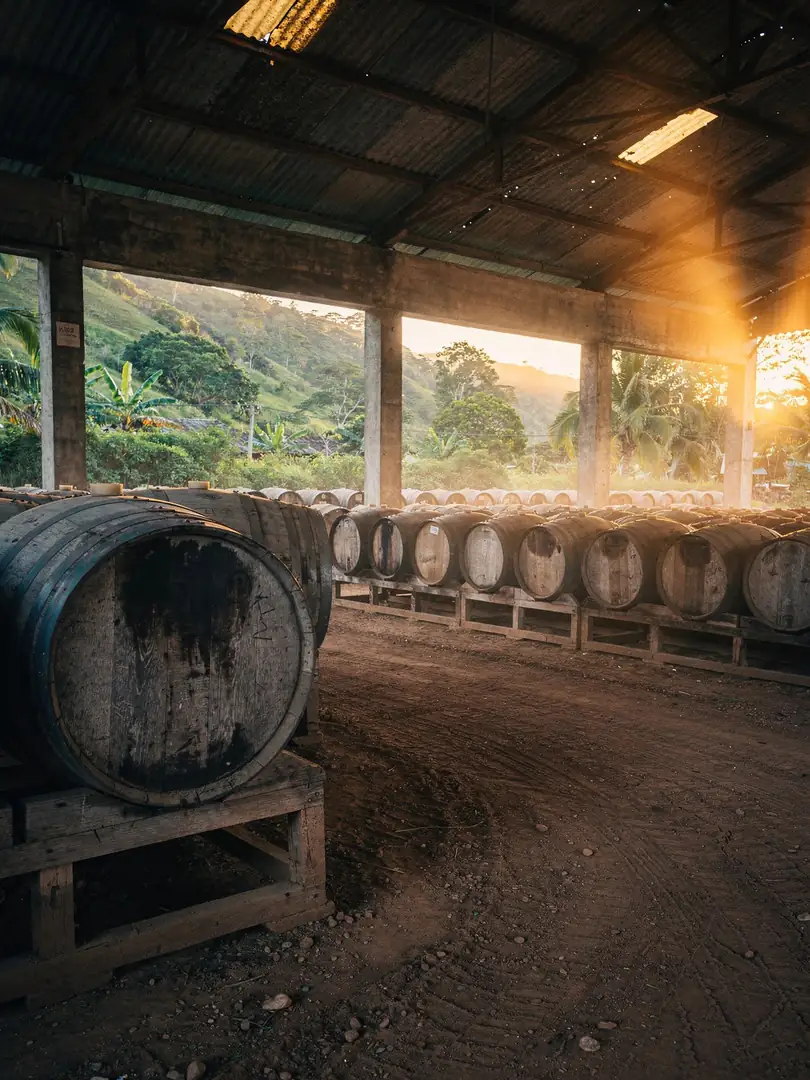
Say Jamaica Rum, and legally you're also talking about the cask: the geographical indication requires maturation on the island in oak casks of no more than 250 litres. For rum from Clarendon or Lluidas Vale, that means an aged spirit has spent its years in Jamaica's climate, not in a cool European warehouse.
Tropical heat speeds up everything that happens in the cask, and it costs rum. Often around eight percent of a cask's contents evaporate each year, far more than in Scotland. How much is lost in any particular warehouse depends on location, cask size and airflow, and precise figures from the Clarendon operations aren't publicly available.
The region's most important rum doesn't come from the cask at all. Wray & Nephew White Overproof and Rum-Bar are bottled unaged, so here it's the distillate itself that counts. Ageing does happen, though: Clarendon holds back rum for the Monymusk brand, and Worthy Park offers, among others, a Single Estate Reserve for which retailers list used bourbon casks.
Colour, again, says little about age here. After distillation, Jamaica Rums may only receive water and caramel colouring. Colouring can darken a young rum, while a pale rum may well have spent longer in the cask.
Anyone stating an age in the EU must refer to the youngest component in the blend. Even if a blend contains rum decades old, the label counts only the youngest cask. This matters for bulk rum, which gets blended further into other brands, since in the end only the figure that can be proven for the youngest portion appears.