Valley, Estate, Blender
Region & History
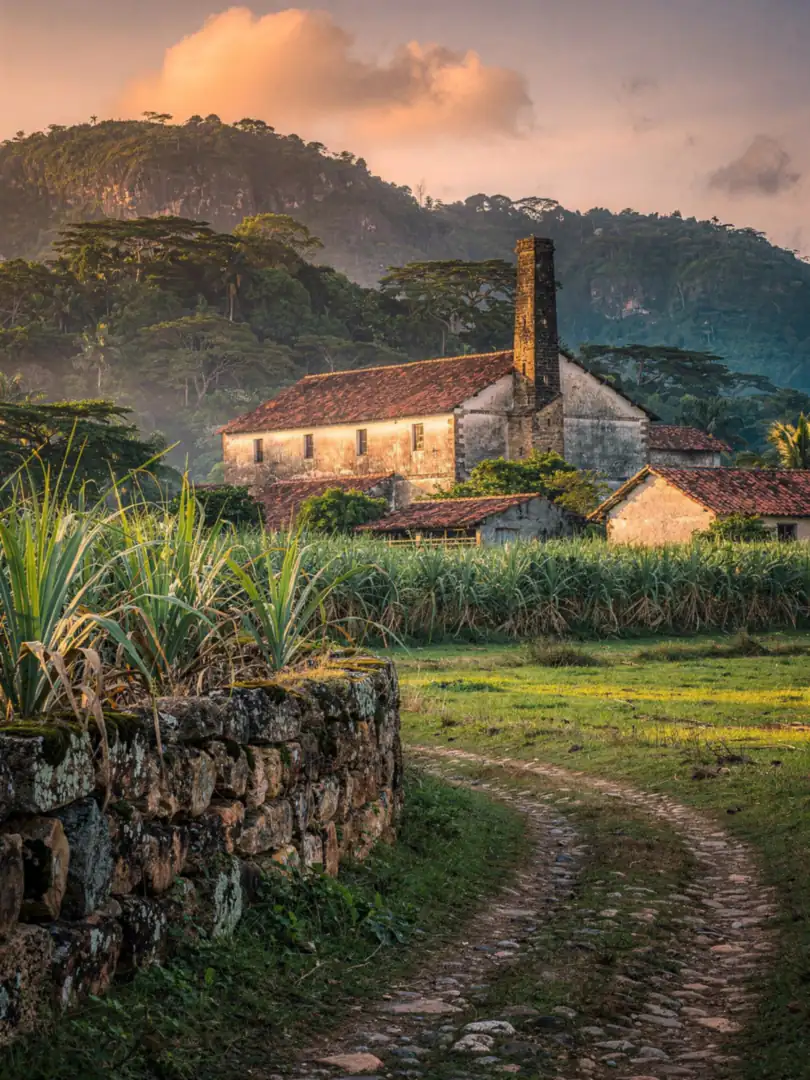
Anyone travelling to Appleton Estate ends up in southwestern Jamaica, in the Nassau Valley of St. Elizabeth Parish. Limestone hills rise around the valley, while sugarcane and the distillery with its chimney stand on the valley floor. The parish capital, Black River, is a small port on the south coast.
British troops took Jamaica from the Spanish in 1655, after which the island's sugar economy grew rapidly. In the Nassau Valley too, enslaved people planted and processed the cane. According to the estate, Francis Dickinson received land here and named it Appleton after his hometown in England. The earliest record of rum from this estate dates from 1749.
It wasn't until 1838 that Jamaica's period of forced "apprenticeship", which followed the abolition of slavery in 1834, finally ended. The island became independent in 1962. A memorial on the estate grounds today commemorates the enslaved people; it was erected by J. Wray & Nephew, the company behind the brand.
Appleton has been part of the Campari Group since 2012, which acquired the brand along with Wray & Nephew and Coruba from Trinidad's CL Financial. Joy Spence has shaped the house style since 1997. She joined the estate as a chemist in 1981 and, according to the company, became the first woman to hold the title of Master Blender in the spirits industry.
What does the geographical indication mean for this rum? "Jamaica Rum" has been a geographical indication of the island since 2016, though the name does not appear in the EU register. For Appleton, this means distillation and maturation in casks up to 250 litres must take place in Jamaica, and only water and caramel colouring may be added after distillation.