Grass, Cane, Fruit
Tasting
What does Grogue taste like, and how should you taste it properly? Spirits made from fresh cane juice generally smell of grass, cane, and ripe fruit. With Grogue, the wild fermentation adds a profile that shifts from farm to farm. That's a clue rooted in the production method, not a promise for every bottle.
A good example is Vulcão Cabo Verde, a clear spirit made from cane juice from Santo Antão at 45 percent ABV. Alongside it are farmhouse spirits from the valleys around Ribeira Grande and Ribeira do Paul, which rarely come in branded bottles and are often only available locally.
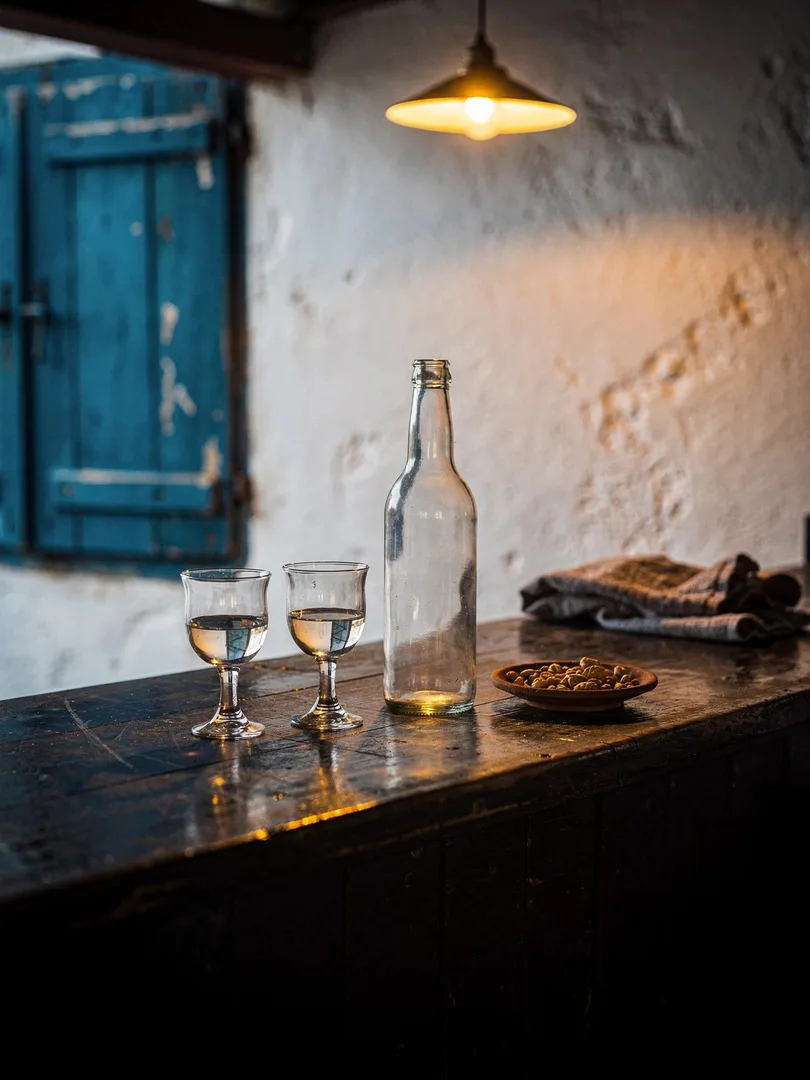
A small tulip-shaped nosing glass concentrates the aroma. The spirit is tasted at room temperature, not chilled, since cold dulls exactly the plant notes you're after. For a first try, a small sip is enough.
Anyone familiar with rhum agricole or cachaça will recognize the kinship: fresh grass, herbal spice, and the sweetness of cane in the background. The oak notes of vanilla and caramel are absent, since no cask comes between. A piece of bread or cheese between sips helps reset the palate.
The spirit shows itself most clearly neat. If 45 percent ABV feels sharp on the tongue, add a drop of water; the alcohol will then release the aromas a bit further. After that, a second attempt with a clear head and a bit of bread is worthwhile.
With unlabeled farmhouse spirits, you can't read off the strength. They can be considerably stronger than the 45 percent ABV of a branded bottle; here the only safe approach is to taste slowly and in small amounts.