Cane and Panela
Sugarcane & Molasses
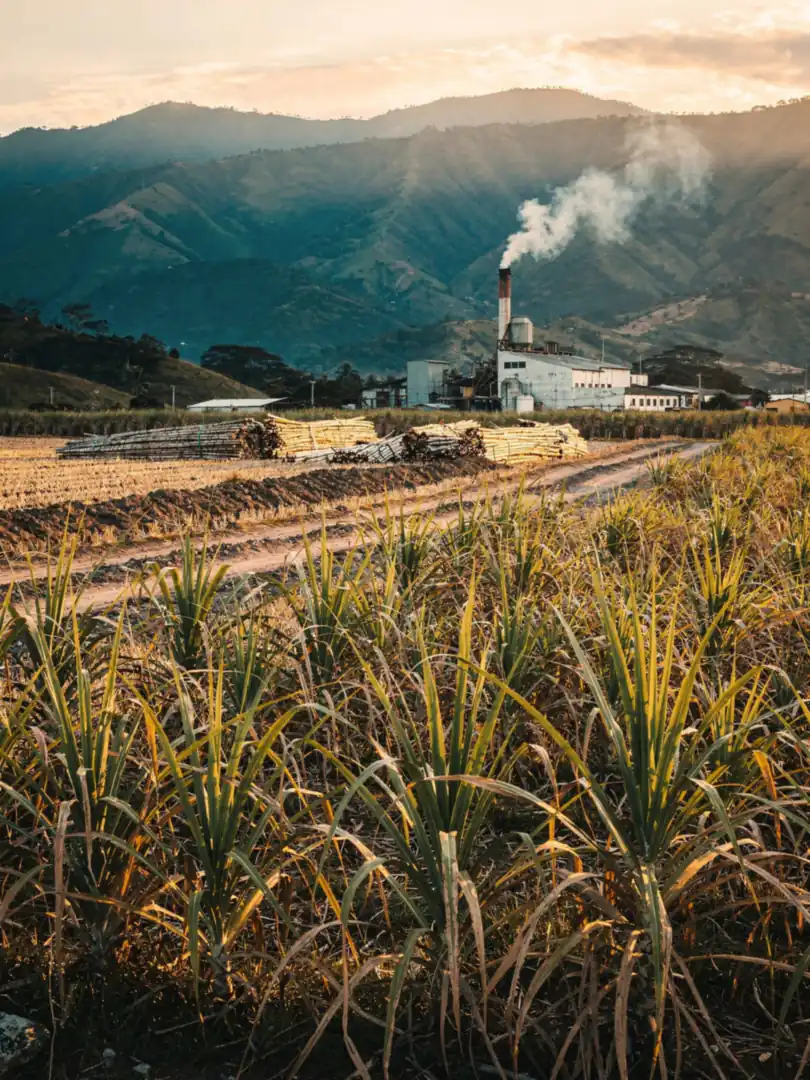
What kind of sugarcane grows in Colombia, and what is made from it? First comes panela, a solid brown cane sugar made from boiled-down juice. According to the agricultural planning authority UPRA, panela cane cultivation is the country's second-most important agricultural industry after coffee, with around 350,000 families depending on it for their livelihood.
The cane grows in 87.5 percent of the departamentos. In 2023, a good fifth of the panela harvest grew in Nariño, Valle del Cauca, Huila, and Caldas. Caldas, the land of coffee mountains around Manizales, therefore also belongs to the cane-growing regions. In Valle del Cauca, sugarcane has shaped agriculture for almost two hundred years.
For rum, something else matters: what's left after pressing, and how is it processed further? Molasses is the thick, dark residue left behind after sugar crystallization. It can be stored and transported over long distances, so a distillery can process it even without its own sugar mill. Fresh sugarcane juice, by contrast, spoils within hours and must be processed immediately.
Dictador markets itself with "sugarcane honey" and explicitly not with molasses. What's meant is thickened juice, a syrup that keeps well and can be processed year-round. This is a claim made by the producer.
Juice, molasses, and syrup lead to different rums. Juice yields the grassy, fresh style of rhum agricole. Molasses provides the rounder, deeper base of most rums, as favored by the Spanish-style school. Syrup sits in between: it carries much of the sugarcane's character while still being storable.
Which raw materials the state distilleries in Manizales and Medellín actually use is something their marketing copy reveals little about. Only the general framework is certain: the country has cane in abundance, and sugar, panela, and rum all share the same plant.