The short answer
Rum is made from sugarcane, but that doesn't mean it has to taste sweet. During fermentation, yeast converts the sugar into alcohol. What you later perceive as sweetness often comes only from the aroma.
Production decides the outcome
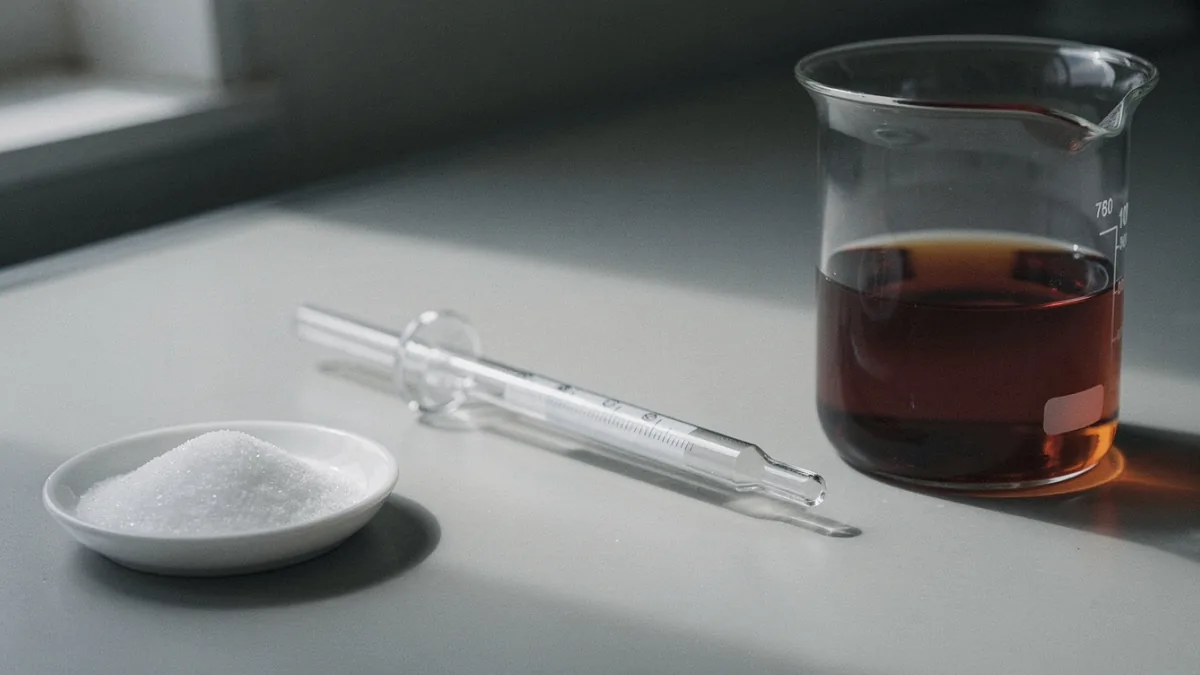
Sugarcane is first turned into juice or syrup. Yeast is then added, which consumes the sugar and produces alcohol. This step is called fermentation. The liquid is then distilled — heated, with the vapor collected again. After these two steps, none of the original sugar remains.
If something in the glass still comes across as sweet, there are other reasons for that. The sweetness can come from the barrel. It can come from a permitted rounding-out of flavor. Or it isn't sweetness at all, but an aroma impression that your brain registers as sweet.
The EU rum category allows a limited amount of sweetening to round out the flavor. It does not allow flavoring. Products with additional additives therefore carry a different legal designation.
Vanilla is, first and foremost, an aroma descriptor
If a description mentions vanilla or caramel, that alone tells you nothing about sugar content. Such words describe what you smell. They say nothing about additives. Color doesn't give it away either, since it can come from several sources.
If you want to know for sure, ask the producer directly about the specific bottling. A general product description won't cut it.
For your own comparison, take two rums that are explicitly described differently. Try them neat, without cola and without juice. Jot down two separate notes: 'smells sweet' and 'tastes sweet.' These are two different observations, and they diverge more often than you'd think.
Sweet flavor is not a measurement
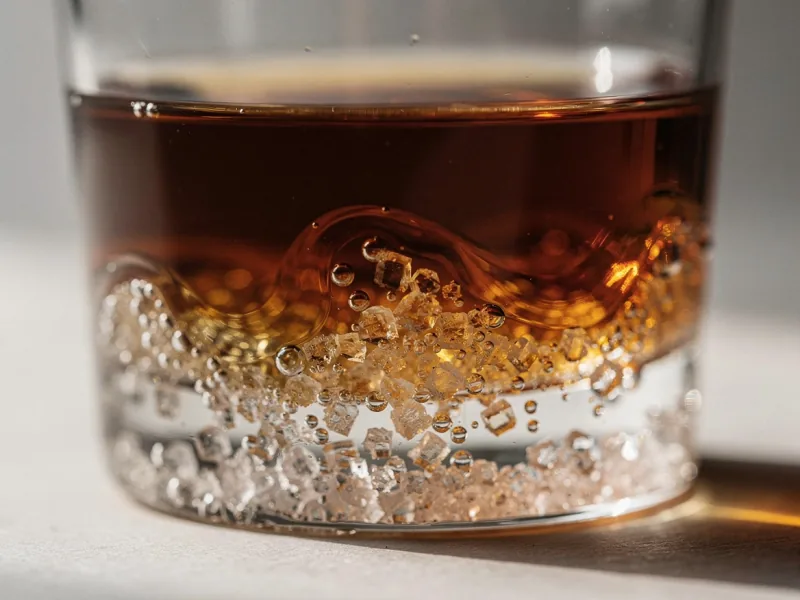
The reason lies in perception. Vanilla and caramel are smells, not tastes. They reach the nose, not the tongue. Because we know them from cake and dessert, the brain registers sweetness. Try pinching your nose while tasting, and you'll notice the difference immediately.
Ripe fruit and barrel-derived aromas work the same way. They create a sweet impression without allowing you to deduce an actual sugar content. The reverse holds true as well: a strong alcohol burn doesn't prove that a rum is unsweetened.
Flavor and measured sugar content answer two different questions. A reliable figure can only come from a producer's statement or an analysis of the specific bottling. A simple density comparison isn't enough, since other components affect density too. Never present an estimated value as a measured sugar content.
What the label can tell you
Read the full legal product designation. It states whether you're holding a rum, a liqueur, or another spirit. This line places the product into its legal category. The big word on the front label doesn't.
If it says 'no added sugar,' that only answers this one question. Origin and recipe remain open.
If an as-unaltered-as-possible rum matters to you, ask explicitly about three things: sweetening, flavoring, and coloring. These terms don't mean the same thing. A producer can deny one and still do the other.
Independent databases and measurement series for individual bottlings circulate online. Often they're the only concrete reference point available. They're not official, and they only ever apply to a specific batch. They're useful as a rough guide, not as proof.