Two Stages
Cask & Climate
Cuban rum matures in at least two stages. That's what the "Cuba" designation of origin requires, with a minimum of three for an Extra Añejo. First, the aguardiente rests alone in wood. It is then blended with the filtered alcohol and water into a base called Ron Base or Ron Fresco, at 40 to 60 percent alcohol. This then goes into the second stage.
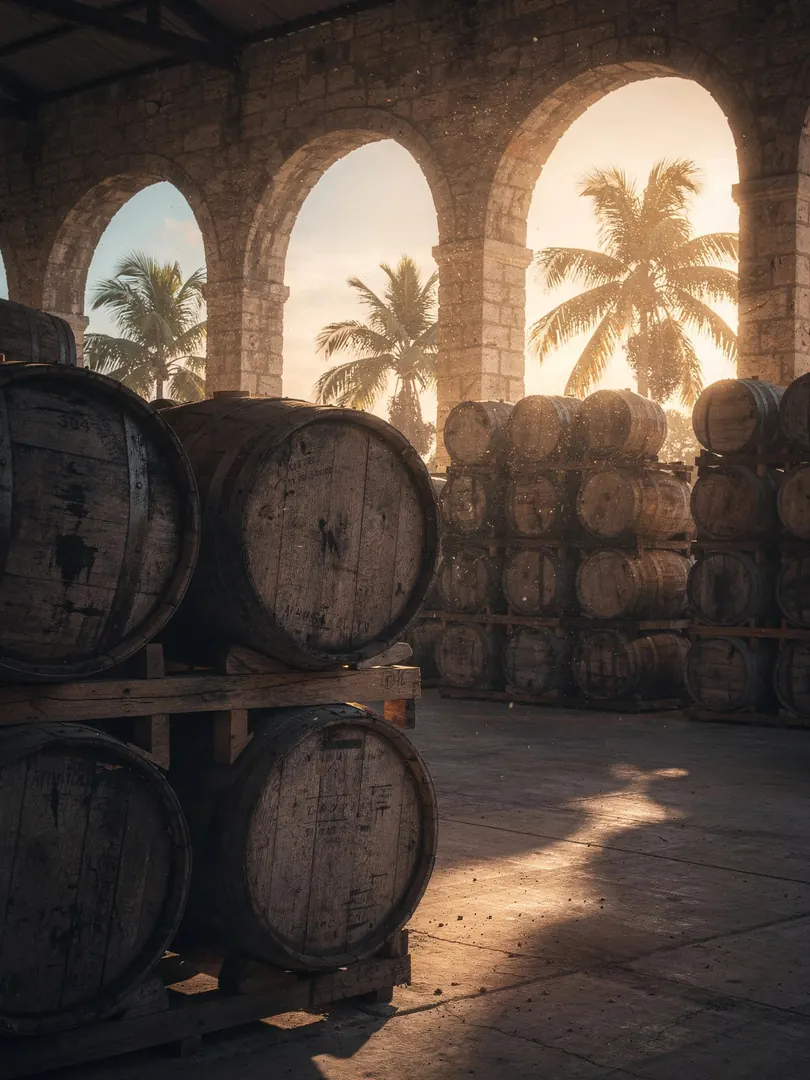
The casks are used white oak barrels of 180 to 250 liters, with up to 500 liters permitted. Maturation takes place entirely in Cuba; only bottling may happen abroad. The tropical climate drives up evaporation. Trade sources cite roughly seven to ten percent a year for the Caribbean, compared with around two percent in Scotland.
What comes out of the cask ranges from pale to golden brown. White rum from Cuba is therefore not unaged: the Añejo Blanco has undergone cask maturation and is then filtered to remove the color. Color reveals nothing about age, since caramel coloring may be used to even out darker shades.
What does the number on an Añejo's label actually say about its age? Under EU law, an age statement may only be given if it refers to the youngest component in the blend and the maturation took place under excise supervision. So on a bottle sold in the EU, a stated year applies to the youngest component; older rums may well be blended in.
The designation of origin recognizes categories such as Añejo Blanco, Añejo, Añejo Reserva, and Extra Añejo. Outside Cuban domestic law, none of these terms has a uniform standard. How long an Añejo truly spent in the cask is, in the end, up to the house. A rule of thumb holds that one year in the tropics equals three years in Europe, but it comes from marketing and has no chemical basis.