Warmth and Time
Fermentation
Juice becomes rum once yeasts ferment it. At La Favorite in Le Lamentin, according to the house, this takes up to 72 hours—three days—while AOC rules allow up to five days. By comparison, fermentations in Jamaica historically lasted nine to ten days, producing a correspondingly more powerful rum.
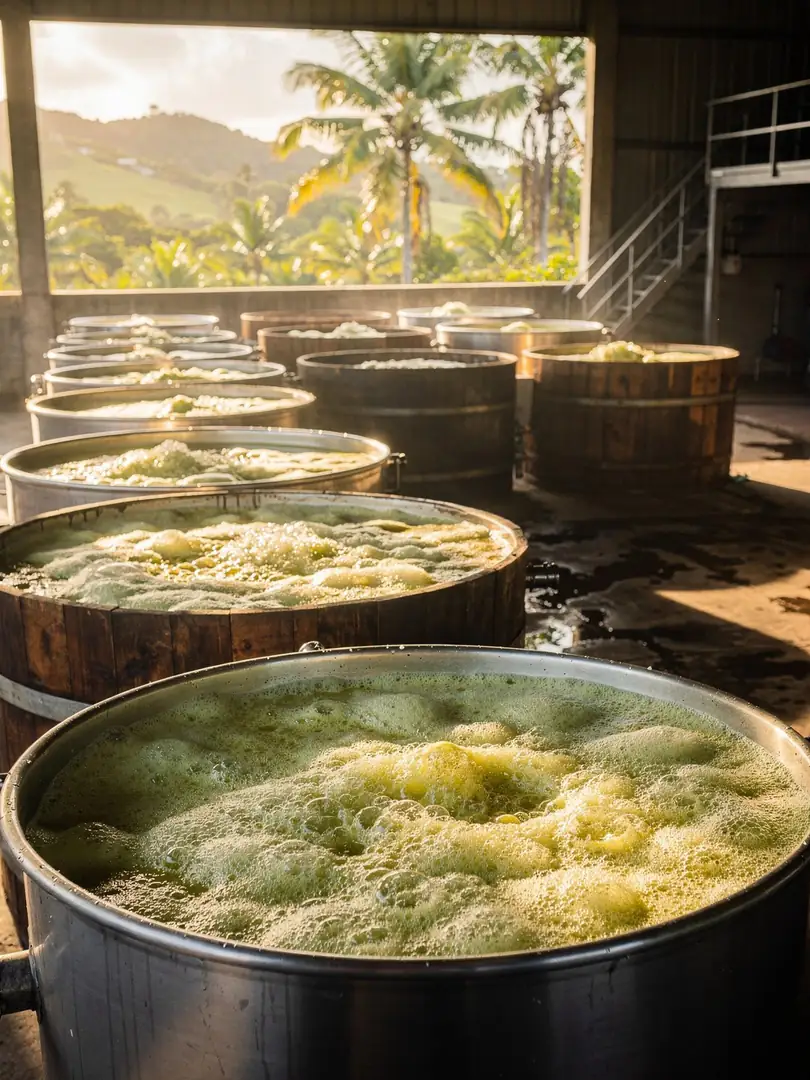
Yeasts are single-celled fungi that consume sugar and release alcohol and carbon dioxide in the process. This is why a fermentation vat bubbles and foams, and the foam only subsides once the sugar is used up. A juice with around 14 percent sugar yields roughly seven percent alcohol by calculation—a thin sugarcane wine that doesn't yet taste like rum.
The heat of the tropics drives the yeasts forward. Where cool fermentations take weeks, a few days suffice on Martinique. Anyone who smells a young Rhum agricole is essentially smelling this short fermentation: fresh cane, a hint of fruit, nothing cooked, nothing heavy.
The juice cannot wait. Once pressed, it begins fermenting on its own and spoils if left standing. Mill and vats therefore run on a tight schedule, and during the campagne the vats are refilled batch by batch, not in continuous flow like the column later on.
Differences between the houses remain small as long as the raw material is the same. What sets a Clément apart from a La Favorite comes less from the vat than from the cane variety, the soil, the column, and the cask. Fermentation mainly lays the foundation on which everything else builds.