Limousin Oak in a Tropical Climate
Barrel & Climate
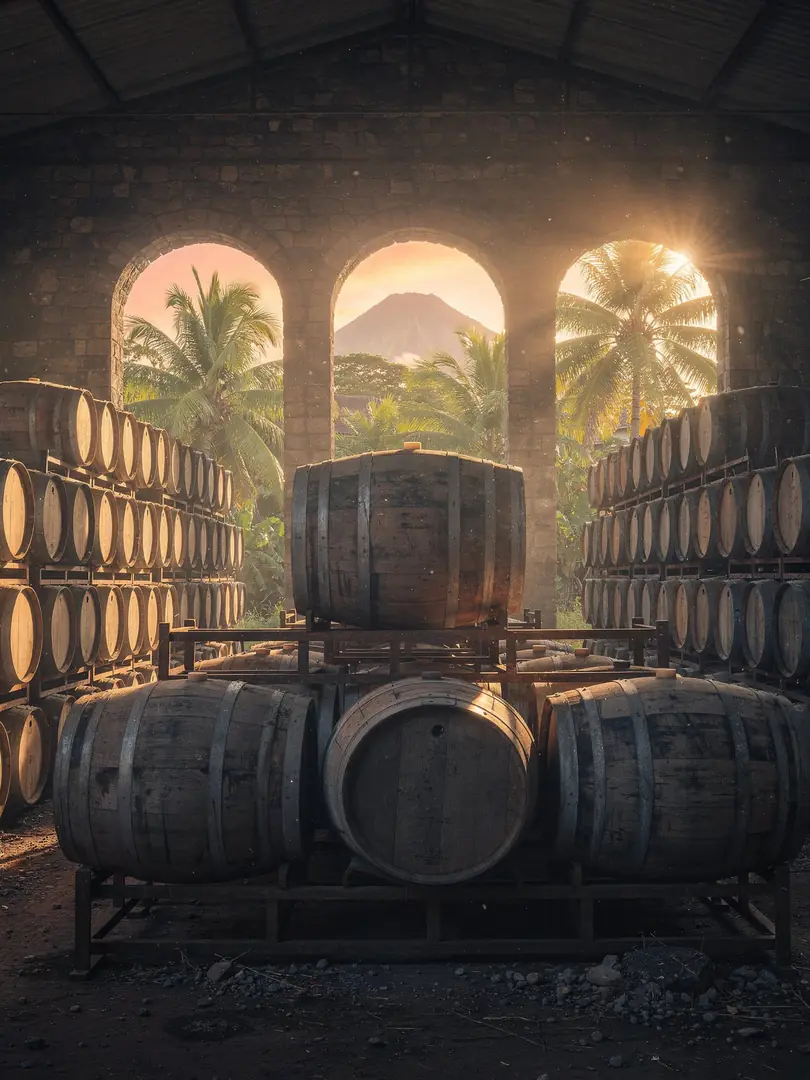
How does rum age in the tropics? For Grays' molasses rums, it begins with a short pre-aging of about eight months in barrel. After that, according to trade reports, the house transfers the spirit for New Grove into oak barrels from Limousin, France. This oak is familiar from Cognac — dense and rich in tannin.
According to these reports, about thirty percent of the barrels are new, the rest have already been used once. New wood gives the rum plenty of vanilla, roasted notes and tannin, while used wood has a milder effect. The ratio is a tool in the cellar master's hands: it determines how much wood ultimately shows up in the glass.
Mauritius's warm climate speeds everything up. The wood releases its flavors faster than in cooler countries, and at the same time more rum evaporates through the barrel — in tropical warehouses often around eight percent a year, compared to about two percent in Scotland. This loss is known as the angel's share. A ten-year-old rum therefore has significantly less volume, but more intensity, than its counterpart aged in a cool cellar.
Mauritius has no age-statement rule of its own; EU law applies. A year on the label only counts if the youngest rum in the bottle is at least that old, and the aging must have taken place under excise supervision. Terms like XO or Extra Old are trade names. They sound like age statements, but without a year on the label they mean nothing definite.
Even the color can be misleading at times. A pale rum may have been aged and then decolorized with activated charcoal, while a dark one may be young and colored with caramel. Anyone wanting to know the true age should therefore look for the number on the label, not the color in the glass. The north of Mauritius offers a fine example of this, with aged molasses rum sitting right alongside young, unaged cane juice rum.