Vanilla and Wood
Tasting
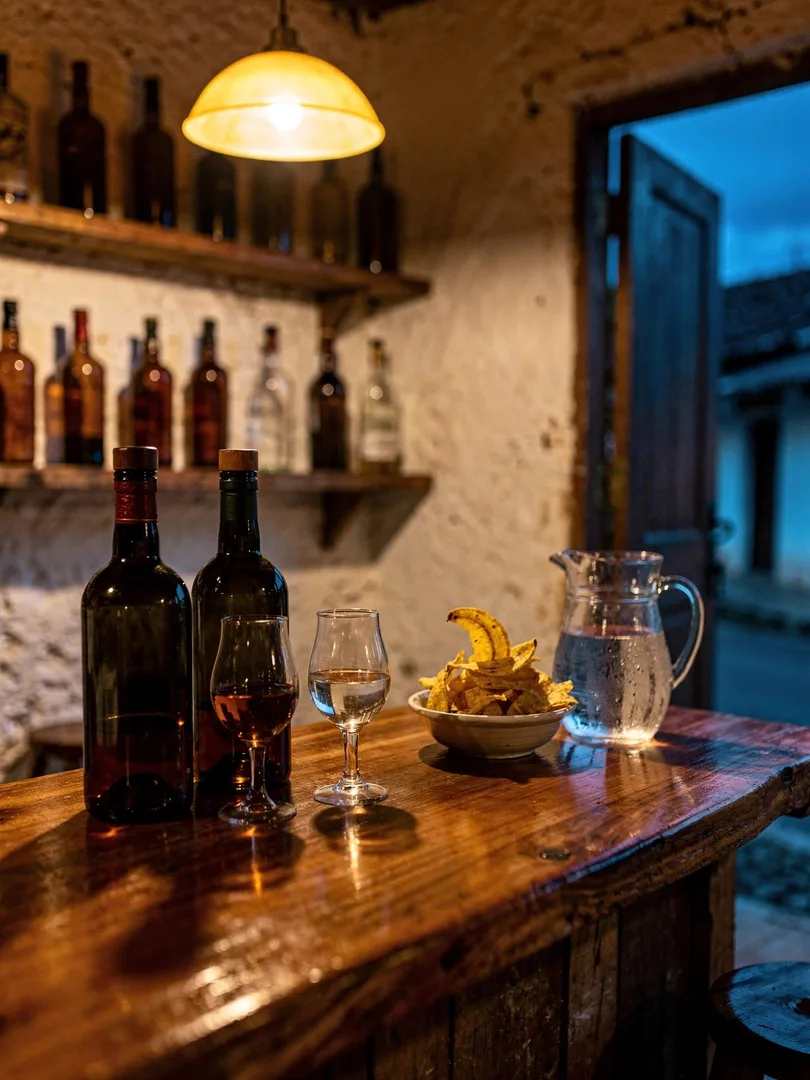
What's the best way to drink Ron Abuelo? Start neat, at room temperature, in a nosing glass or a small tulip glass. The narrow opening concentrates the aromas, and in a light rum like this, they are delicate. A drop of water can open them up further, though it's not essential.
When tasting, the color stands out first. An Abuelo Añejo glows golden brown, while the 12-year bottling runs darker. On the nose, this style often shows vanilla, caramel, and baking spice. On the palate come dried fruits, orange peel, and wood; at 40% ABV the alcohol is mild, and the texture leans soft rather than sharp. The finish, meaning how long the flavor lingers after swallowing, is noticeably longer in the older bottling.
Three examples from Varela Hermanos in Pesé illustrate the house style. Abuelo Añejo is the entry point and shows the light style without heavy oak influence. Abuelo 12 Años represents the older blend, with more oak, toasted notes, and length. Seco Herrerano shows the unaged counterpart: clear, dry, with a light sugarcane note. With the Seco, it's worth comparing it to vodka: it smells of sugarcane, where a vodka stays neutral.
Compared to a Jamaican rum, the Abuelo feels calm. It doesn't aim to shout with fruit, but to carry wood and sweetness evenly. Drunk neat, the Añejo tastes sweeter; with a drop of water, the wood comes through more clearly. This makes it easy to get into, but it does call for close attention to spot the small differences between the Añejo and the 12-year.
A tip for comparisons: set two glasses side by side, taste the younger rum first, then the older one, with water and a neutral piece of bread in between. This helps separate wood and sweetness. The Seco needs no wood and holds up well served chilled with a clean, clear profile.