Tubâ and the Vat
Fermentation
In the Philippines, alcohol has long fermented without any human intervention. Sap collected from the coconut palm's flower stalks turns into tubâ, a palm wine, the moment wild yeasts from the air find their way in. Spirits like Lambanog developed from similar wines. Rum is the industrial relative of this tradition: here, humans control the sugar, the yeast, and the temperature.
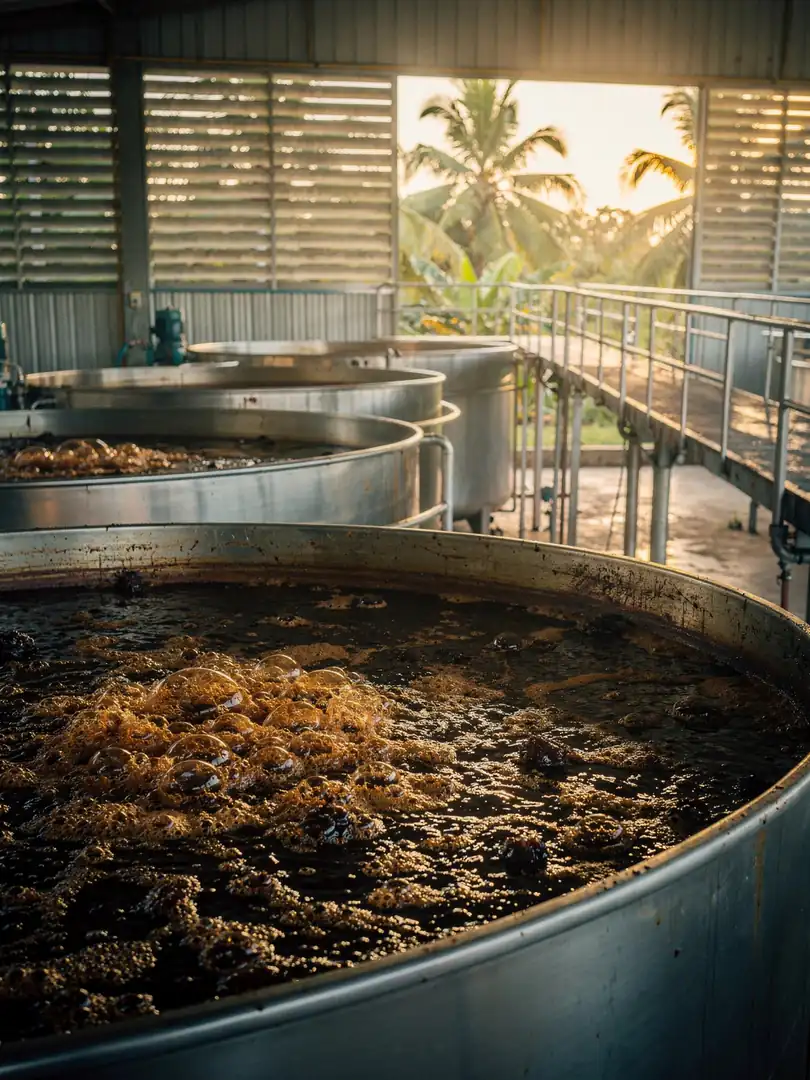
For molasses rum, the molasses is diluted with water until a thin, sweet wash forms. Yeast converts the sugar into alcohol and carbon dioxide, and the vat visibly foams as a result. Along the way, it also produces esters — aroma compounds formed from acids and alcohol that smell of fruit or flowers. The longer and warmer the fermentation runs, the more of them develop.
In a country that's warm all year round, the fermenting wash heats itself up further still, since yeast releases heat as it works. Where it never really cools down, distillers must either chill the vat or choose a yeast strain that tolerates heat. Fermentation that runs too hot produces off-flavors, such as solvent-like notes, that later spoil the glass.
Tanduay is a column-still rum, and column distillation aims for a purer, lighter flavor than pot-still distillation. The bold, ester-heavy aromas of Jamaican pot-still rums are therefore not the goal of this fermentation. Instead, it's designed to deliver clean, consistent alcohol that the cask and the blend can later build upon.
What fermentation contributes to flavor can be summed up in one sentence: it determines how much fruit and spice make it into the distillate in the first place, and the cask can only add to that later, never replace it. That's why rums made from the same sugar source can differ so dramatically once yeast, duration, and temperature are varied.