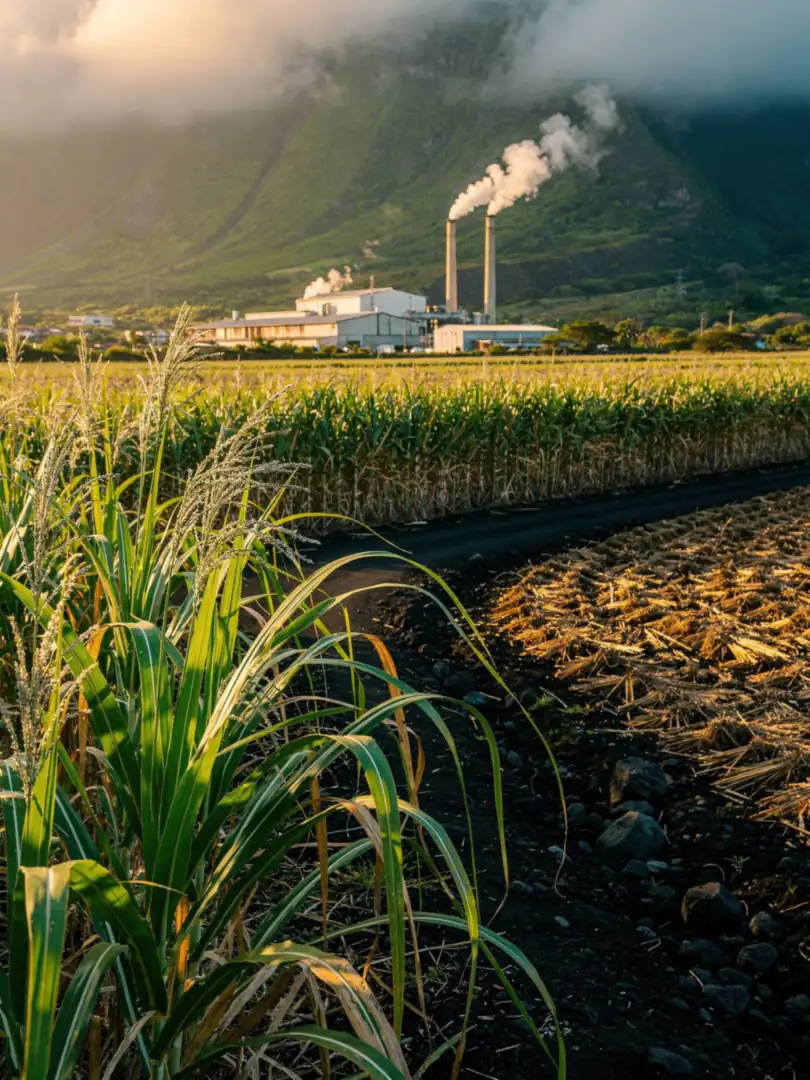
Cane at the Volcano
Sugarcane & Molasses
Sugarcane is the dominant crop on Réunion: around 24,000 hectares carry cane, about 57 percent of the agricultural land. It grows in volcanic soil from the rain-soaked east, where the trade winds unload their clouds, all the way to the drier west. One variety, which reached America from 1785 as Canne d'Otaheite, came by way of this island.
Harvest runs from July to December. This period is called campagne sucrière, the sugar campaign, and trucks then head to the island's two sugar mills, including Bois-Rouge near Saint-André. Both are designed for around two million tonnes of cane. In 2024, according to the Chamber of Agriculture, only 1.13 million tonnes arrived, the weakest campaign on record there.
At the mill the cane is pressed, the juice thickened into sugar and crystallized. What doesn't crystallize is molasses, a thick, dark syrup still rich in residual sugar. The fiber residue, bagasse, is burned to generate electricity. According to press reports, the cane, sugar, and rum industry secures around 10,500 jobs.
Most of the island's rum comes from this molasses. According to trade press reports, Savanna sources cane and molasses from the Bois-Rouge mill, on whose grounds the distillery has stood since 1992, and processes both raw materials: juice into rhum agricole, molasses into rhum traditionnel and Grand arôme.
The distinction is regulated on the label. Only what comes from sugarcane juice may be called rhum agricole. Molasses rum is called rhum traditionnel or de sucrerie on Réunion, and traditionnel also means unsweetened. A rum made from juice tastes fresher and grassier, one from molasses darker and rounder, with caramel and dried fruit.