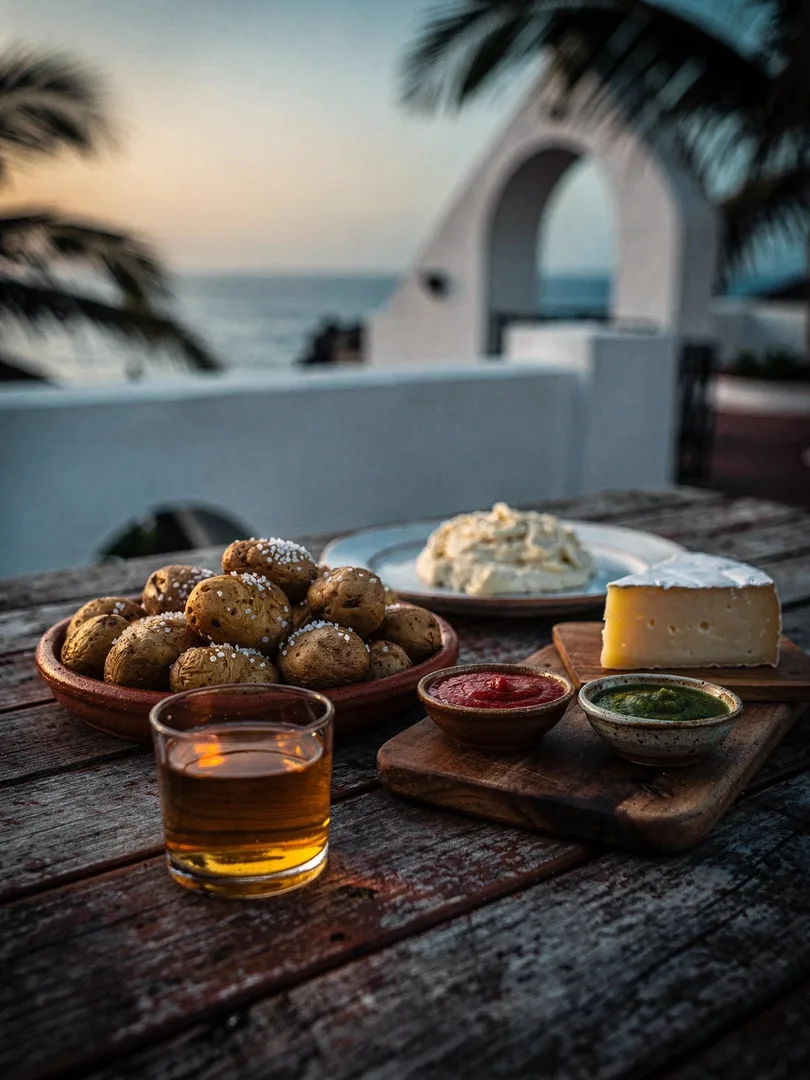
Mojo, cheese, honey
Food & drinking culture
On the islands, many meals start with papas arrugadas, small potatoes boiled in heavily salted water until their skins wrinkle. These come with mojo, a cold sauce made from oil, vinegar, garlic, and spices. It's red with paprika or green with herbs. Salt and fat call for something sweet in response, and that's where Ronmiel comes in.
Sancocho canario brings salted fish to the table with potatoes and sweet potatoes, served alongside mojo and gofio, a flour made from roasted grain. Gofio is considered a staple food on the islands, with roots among the islands' original inhabitants. It turns up in porridge, dough, and broth alike.
Queso de Flor from Guía on Gran Canaria is a salty, robust cheese; next to it, the honeyed note of Ronmiel acts as a counterweight. For dessert, Bienmesabe fits well, a sweet cream made from almonds, sugar, and egg yolk that's popular across the islands.
Ronmiel itself was long a drink of simple taverns: it was poured in tascas and ventas, in taverns and country inns, and its name spelled out its ingredients, ron and miel. A magazine from Arucas ran a half-page ad in June 1953 for "Ronmiel Las Colmenas, estilo canario."
The law also recognizes this tradition. A Spanish decree from 1975 regulating rum explicitly names Ronmiel as a Canarian specialty. Anyone traveling to Arucas can book a tour at Arehucas, the house that traces its roots back to the Fábrica San Pedro.