Glass and patience
Tasting
In the glass, Ronmiel de Canarias delivers exactly what its specification promises: a clear liquid ranging from golden yellow to deep mahogany. On the nose, honey comes first, with rum behind it. The sip is sweet and oily, and the finish lingers long on honey and rum. The specification allows up to 350 grams of sugar per liter, making it a drink best suited to small glasses.
For the rums, you'll want a nosing glass, a tulip-shaped glass with a narrower opening that concentrates the aromas. Start by nosing with your mouth slightly open, then take a small sip and let it sit briefly on the palate. Room temperature is best, since cold mutes the aromas. A few drops of water can sometimes open up a rum at 40 percent ABV, though it's not essential.
Four examples make a good starting point. Arehucas Carta Blanca and Carta Oro, both from Arucas, show when tasted side by side just how far apart a single producer's color and aroma can be. Ron Aldea from La Palma represents rum made from fresh cane juice. A Ronmiel, say the one from Arehucas, rounds things out with the islands' honey style.
Ronmiel is best enjoyed in small measures, in a liqueur glass or a small tumbler, at room temperature or lightly chilled. It doesn't need water, since its ABV already sits between just 20 and 30 percent.
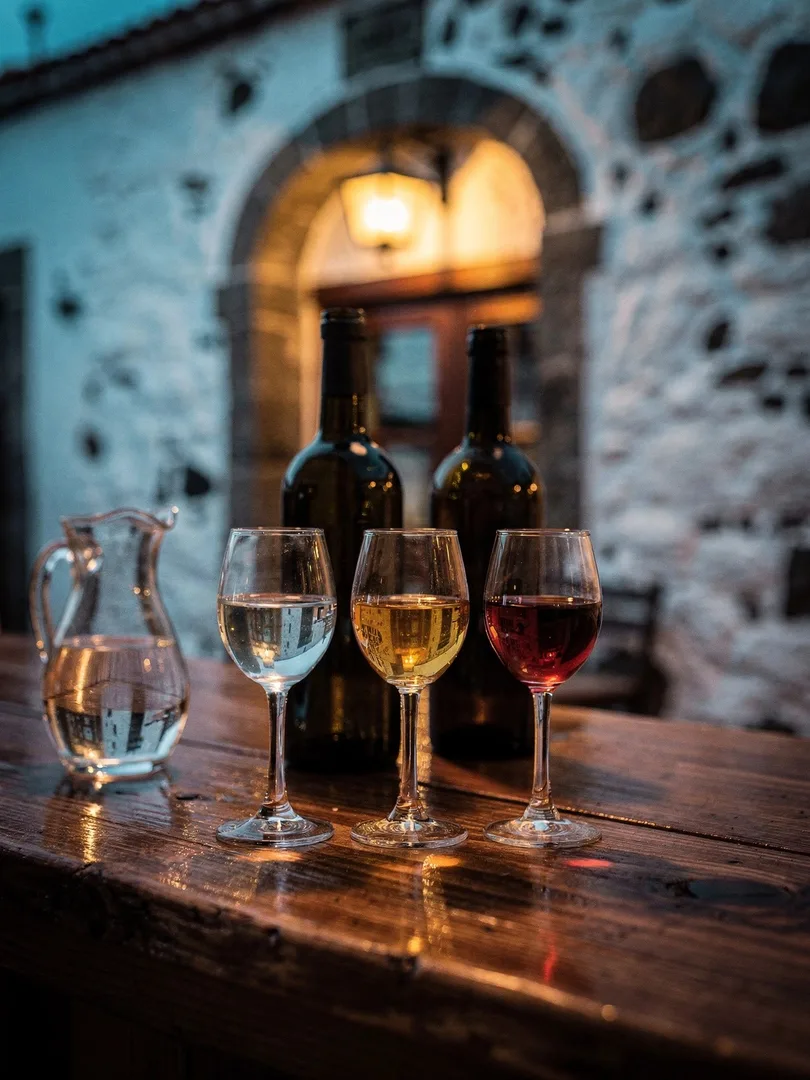
When tasting several samples side by side, move from light to heavy and from dry to sweet: start with the white rum, then the golden rum, and finish with the Ronmiel. That way the honey won't linger on the tongue and mask anything that follows. It also helps to jot down notes on aroma, taste, and finish, so the comparison stays clear and doesn't blur in your memory.