Arepa and Rum
Food & Drinking Culture
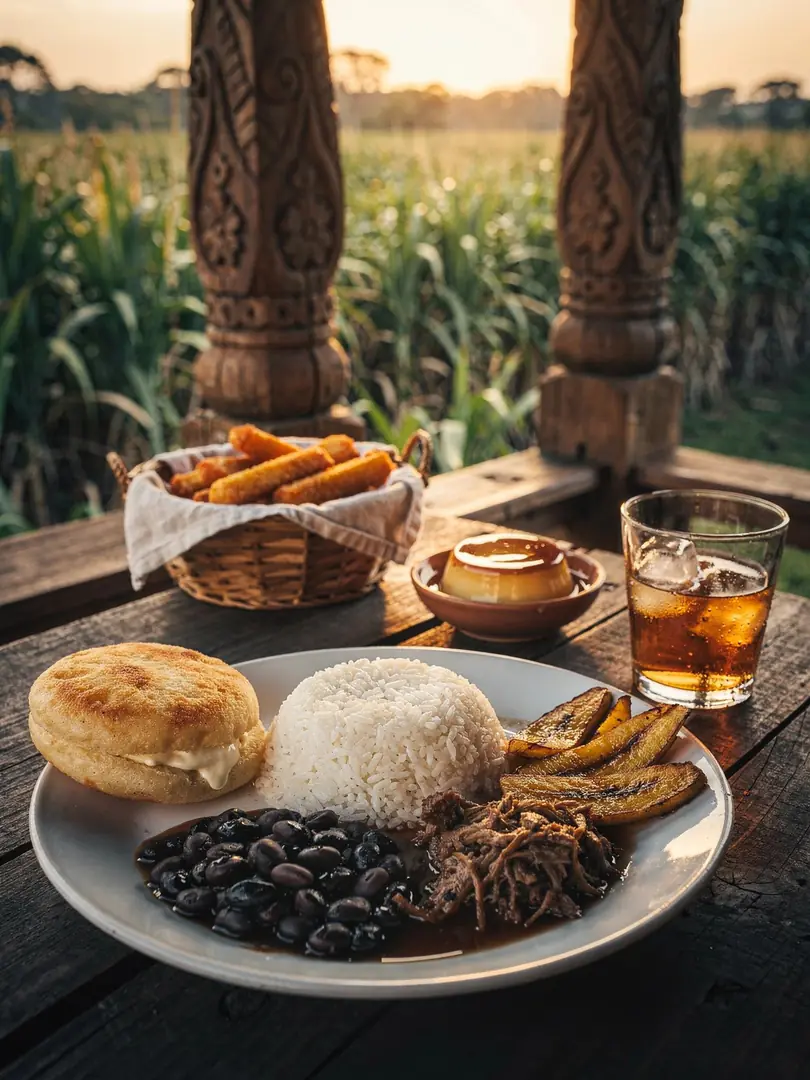
An arepa appears in nearly every meal in Venezuela. The flatbread, made from pre-cooked corn flour, is baked or fried, then split open and filled. Queso de mano, a soft, fresh cheese that stretches when warm, pairs well with it. A smooth rum with vanilla and caramel notes suits such a salty, mild meal nicely.
The national dish is Pabellón criollo. The plate features rice, black beans, shredded beef, and fried plantains. The sweetness of the plantain meets the savoriness of the beef, and Spanish-style rums, with their caramel notes, pick up exactly this tension. A glass of rum is sipped alongside it in small sips, not downed in one go, and often enjoyed only after the meal.
At celebrations, tequeños come to the table—cheese sticks wrapped in pastry and deep-fried. At Christmas, hallaca is a staple: a corn dough filled with meat, olives, and raisins, wrapped in banana leaves and steamed. Both dishes are communal meals: they're prepared for many people and eaten together, often over the course of hours. Many families drink Ponche crema alongside them, a creamy eggnog made with rum.
Dessert is often quesillo, a caramel pudding made from eggs and milk. Its toasted notes practically meet the aromas of an aged rum on their own terms. It's drunk with meals and at celebrations, rarely in haste. During conversations in Aragua, the glass often circulates for a long while.
Hacienda Santa Teresa near El Consejo, according to its own account, welcomes visitors and offers tours through the distillery. The estate is also home to Proyecto Alcatraz. Its aim is to bring young people with behavioral challenges back into a stable environment through the sport of rugby. Rum appears there not as the occasion itself, but as part of a hacienda that shapes its valley.