Smooth in the Glass
Tasting
First, look at the color. An añejo from Aragua glows anywhere from amber to mahogany, but the color reveals little about actual age, since the EU permits caramel coloring for color adjustment. In Germany, a note reading "with coloring" must appear on the label when no ingredient list is given.
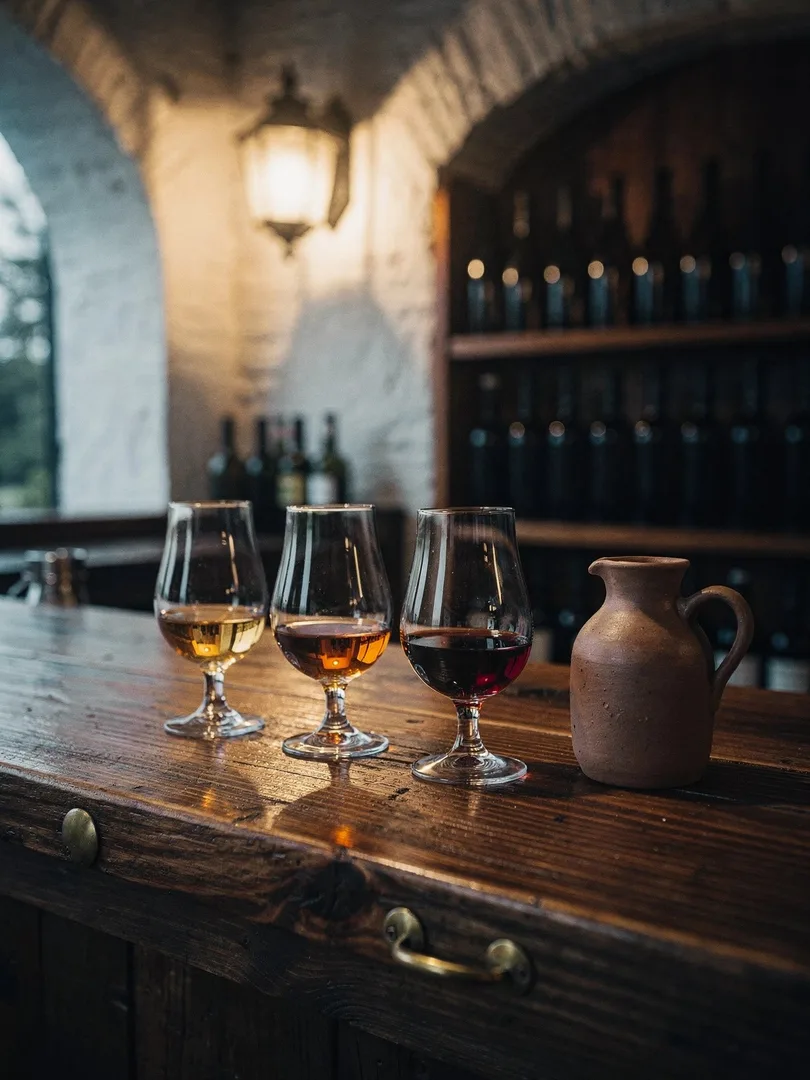
A nosing glass or a tulip-shaped glass with a narrow rim concentrates the aromas better than a tumbler. Room temperature is correct, because cold suppresses the scents. Swirl briefly, smell first with your mouth open, then with it closed, and only then take a small sip. A glass that tapers toward the top holds the aromas together, while a wide one lets them escape.
Three brands serve well as examples. Santa Teresa 1796 represents the hacienda's solera style, Pampero Aniversario represents the house from Caracas, and Cacique 500 represents the brand considered the best-seller in Venezuela. Placing all three side by side reveals just how differently sweet, woody, and spicy a rum from the same country can turn out.
On the nose, vanilla, caramel, dried fruit, and wood typically dominate. On the palate, the rum feels smooth, with little sharpness, and the finish tends to be short to medium in length. Some bottles taste sweeter than their stated ingredients would suggest. In the EU, up to 20 g/l of sugar is permitted, and it doesn't need to be declared on the label.
Neat or with water? At 40% ABV, just a few drops of water usually open up the aromas further; rarely is more needed. If you want to try it, add the water with a pipette or spoon and wait two minutes. Then nose the rum again and notice whether wood or fruit comes through more strongly.