Three Years on the Lees
Lees Aging & Dosage
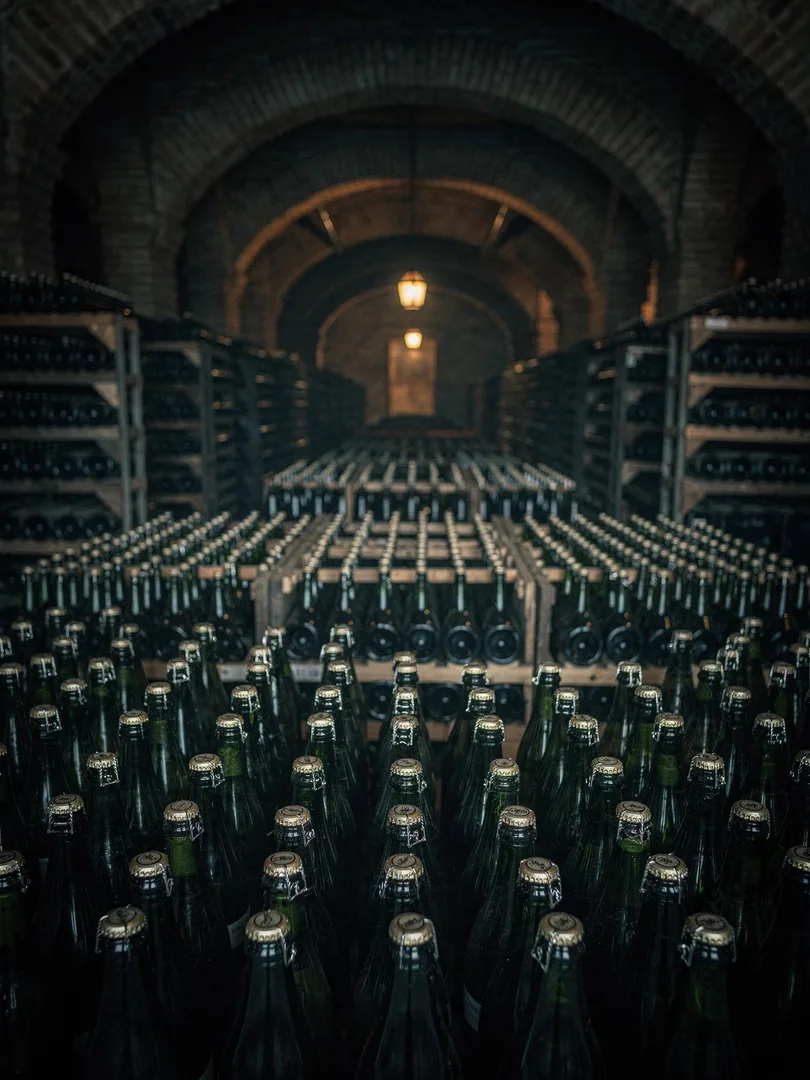
After fermentation, the bottles lie horizontally in the cellar, and the yeast keeps working. It breaks down slowly, lending the wine notes of bread crust, brioche and nuts. Experts call this autolysis. For Baron B, trade sources cite roughly 36 months on the lees, three times the minimum of twelve months required for non-vintage Champagne.
Then comes riddling. In the past, each bottle was turned by hand a bit at a time and tilted progressively steeper day by day; today, riddling machines often take over. The goal is to get the yeast to slide into the neck of the bottle. There, the neck is briefly frozen, the pressure shoots out the frozen yeast plug, and clear wine remains. This removal step is called disgorgement.
Next comes the dosage. A small amount of sugar, dissolved in wine, tops up the bottle again and rounds out the acidity. Without it, sparkling wine tastes very harsh. In Mendoza, houses mainly offer dry styles. Baron B produces cuvées labeled Extra Brut and Brut Nature.
By the European classification, Brut Nature means less than 3 grams of sugar per liter. Extra Brut falls between 0 and 6 grams. You can't get drier than that, and that's exactly why this style only works with very ripe, clean acidity like the kind altitude provides.
After that, the bottle rests once more until the sugar has fully integrated into the wine. Only then does it go on sale.