Bottle and Tank
The Second Fermentation
How is sparkling wine made in Argentina? Wine law allows for several methods. The INV rules recognize the classic method with bottle fermentation, as well as transfer from bottle to tank and tank fermentation via the Charmat method. In all cases, the carbon dioxide must come exclusively from a second alcoholic fermentation in a sealed vessel.
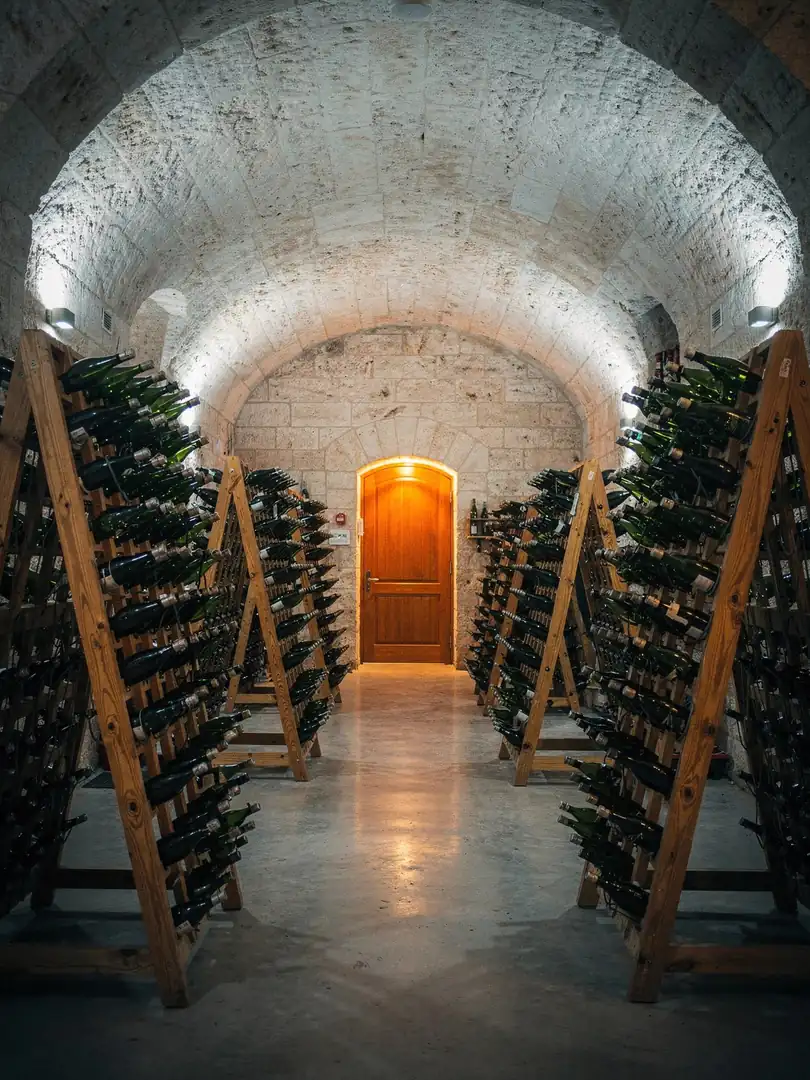
For sparkling wine from Mendoza considered top-tier, bottle fermentation is the standard. It begins with the tirage: the dry base wine is dosed with sugar and yeast, the mixture goes into the bottle, and a crown cap seals it. As the yeast consumes the sugar, alcohol and carbon dioxide form, with the CO2 remaining dissolved in the wine.
This is how the pressure builds. Under the Argentine definition, it must be no less than four atmospheres at 20 degrees, slightly above the European minimum of 3.5 bar. For comparison: a car tire holds about two to three bar, so the bottle holds significantly more tension than it appears to. That's why sparkling wine bottles are made of thick glass and have a deep indentation at the bottom, the punt.
Fermentation takes weeks, longer still at cool cellar temperatures. Once finished, the dead yeast settles as a fine sediment against the bottle wall. This isn't a flaw but the start of the aging process, described in the next step.
Chandon Argentina relies on bottle fermentation for its Baron B cuvées. On bottles destined for the European market, the method is labeled traditional bottle fermentation; the term méthode champenoise is off-limits outside Champagne. Anyone familiar with tank fermentation, say from Prosecco, will notice the difference mainly in finesse: bubbles formed in the bottle are smaller and last longer.
Baron B Extra BrutBottle fermentation · Chardonnay, Pinot Noir
- Time on lees
- 36 Months
- Sugar
- 0–6 g/l
- Alcohol
- 12–12.5 % vol
Citrus and brioche, taut high-altitude acidity, dry finish.