Late disgorged
Lees Aging & Dosage
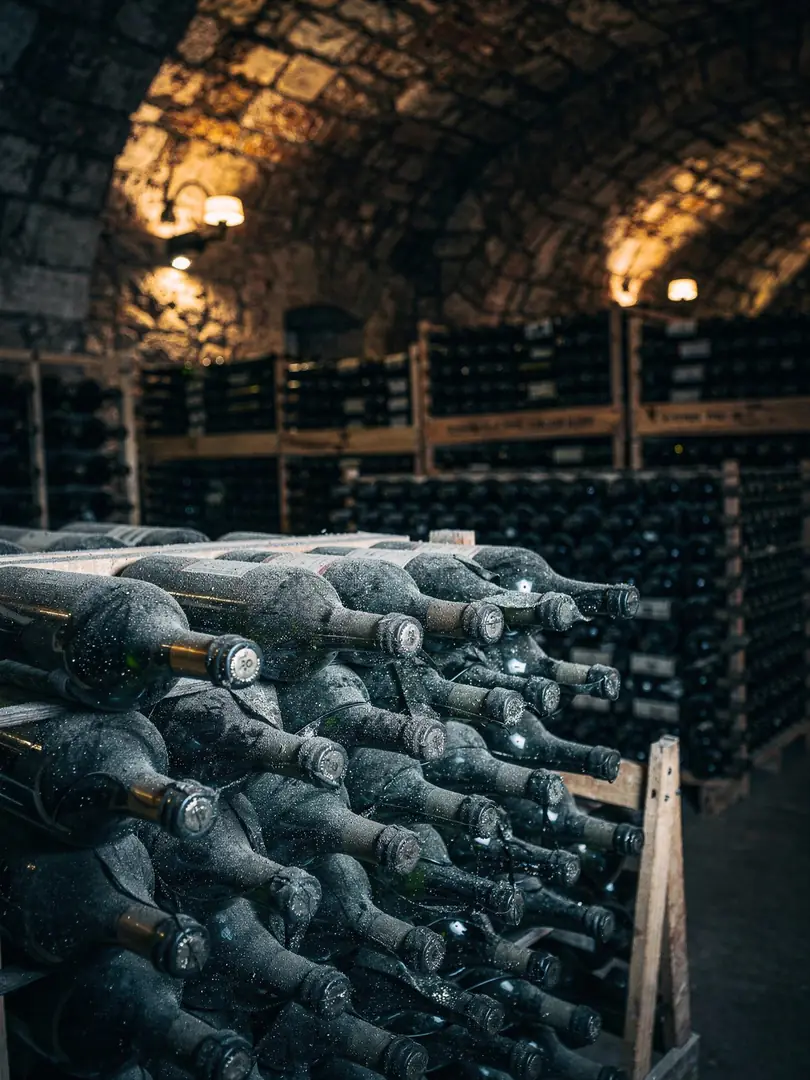
After the second fermentation, the wine rests on its lees. The spent yeast cells break down, releasing what's known as yeast autolysis: aromas of bread, brioche and nuts. The longer the wine rests there, the finer the mousse becomes and the more the bouquet changes. How long is up to the house. According to industry sources, the Tasmania appellation contains no requirements on this.
One example of very long aging is House of Arras's "E.J. Carr Late Disgorged" series. "Late Disgorged" means the bottles remain on the lees for an exceptionally long time and are only disgorged shortly before release. The 2004 vintage of this series was named the world's best sparkling wine at the 2020 Decanter competition. Retailers also carry later vintages such as 2007 and 2008.
Before release comes riddling, during which the lees gradually migrate into the neck of the bottle, followed by disgorgement. The neck is frozen, the crown cap removed, and the pressure shoots out the frozen yeast plug. This causes some loss of wine, and the gap is filled with the dosage, a mixture of wine and sugar. The final cork with wire cage follows.
The dosage determines how sweet the finished wine is. As a guide, the EU scale is used, which wines from overseas also follow in the trade: Brut Nature has under 3 grams of sugar per liter, Extra Brut 0 to 6 grams, Brut under 12 grams. Extra Dry, incidentally, is sweeter than Brut, at 12 to 17 grams. Tasmanian houses mostly label their wines Brut.
Especially with wines that have long lees aging, many houses choose a low dosage, since the lees already provide richness and roundness, and the island's acidity would otherwise need to be cushioned with sugar.