Citrus, brioche, tension
Tasting
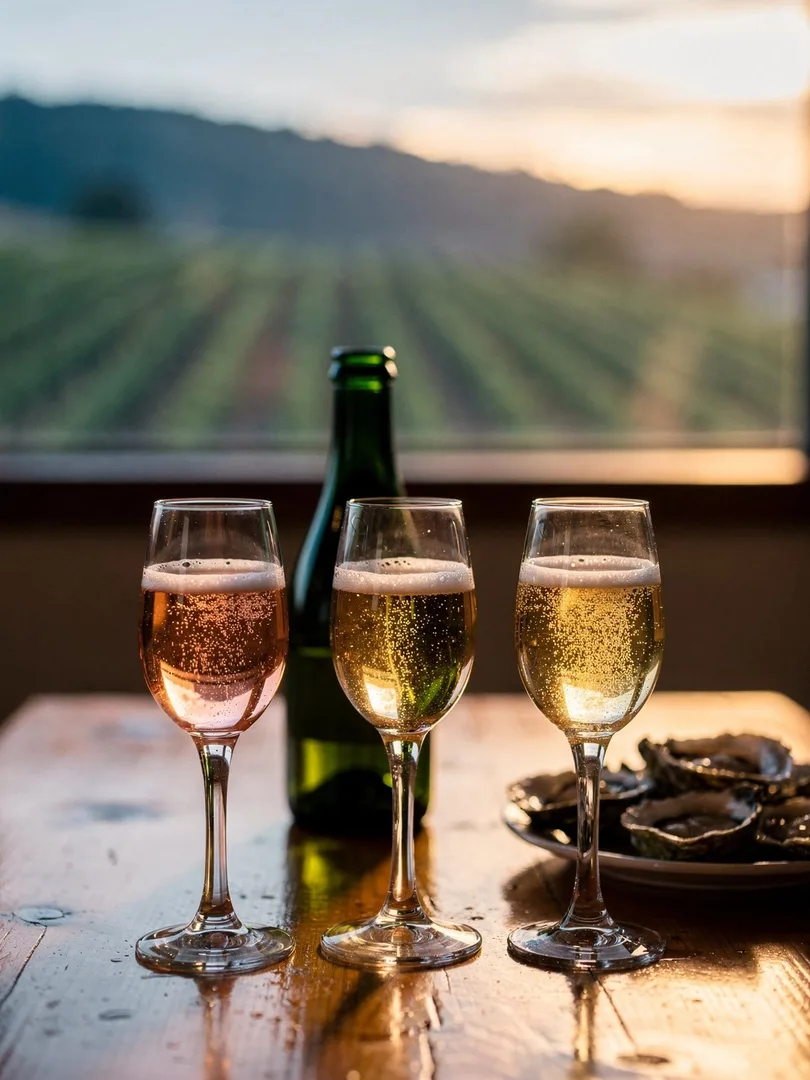
Tasmanian sparkling wine typically tastes of citrus, green apple and white fruit, carried by crisp acidity. With time on the lees, brioche and toasted nuts emerge. This is a style closer to Champagne than to a fruity sparkling wine from the mainland.
Four wines serve as examples. Jansz Premium Cuvée is the house's entry-level wine and shows the style built from Chardonnay and Pinot Noir. There's also a Premium Rosé. Clover Hill stands for sparkling wine from a single estate, using all three Champagne varieties. House of Arras demonstrates, through its E.J. Carr series, how far the style can develop with age. Bay of Fires offers a fresh, straightforward entry point with its Tasmanian Cuvée Brut.
As for the glass: a tulip or white wine glass works better than a flat coupe. The narrow opening holds the aromas together, and the bubbles rise for longer. The coupe lets aroma and carbon dioxide escape quickly.
On temperature: the wine tastes best well chilled, between six and eight degrees Celsius. Too cold, and it closes up; too warm, and the carbonation feels coarse. Before serving, it helps to place the bottle in an ice bucket filled with plenty of water for about half an hour, rather than putting it in the freezer.
Opening is best done calmly. Loosen the wire cage, hold the bottle at an angle, grip the cork and turn the bottle, not the cork. It should sigh quietly, not pop. This way the foam stays in the glass, and the wine doesn't lose its bubbles.