Bottle, not tank
The Second Fermentation
Tasmanian sparkling wine from the well-known houses is made through bottle fermentation, usually called "Méthode Traditionnelle" in Australia. Clover Hill in the northeast and Jansz at Pipers River are among the houses making sparkling wine by this traditional method. According to the Wine Companion guide, Clover Hill bottles exclusively this way. Tank fermentation, in which the second fermentation takes place in a large stainless steel tank, plays no part in the brands featured here.
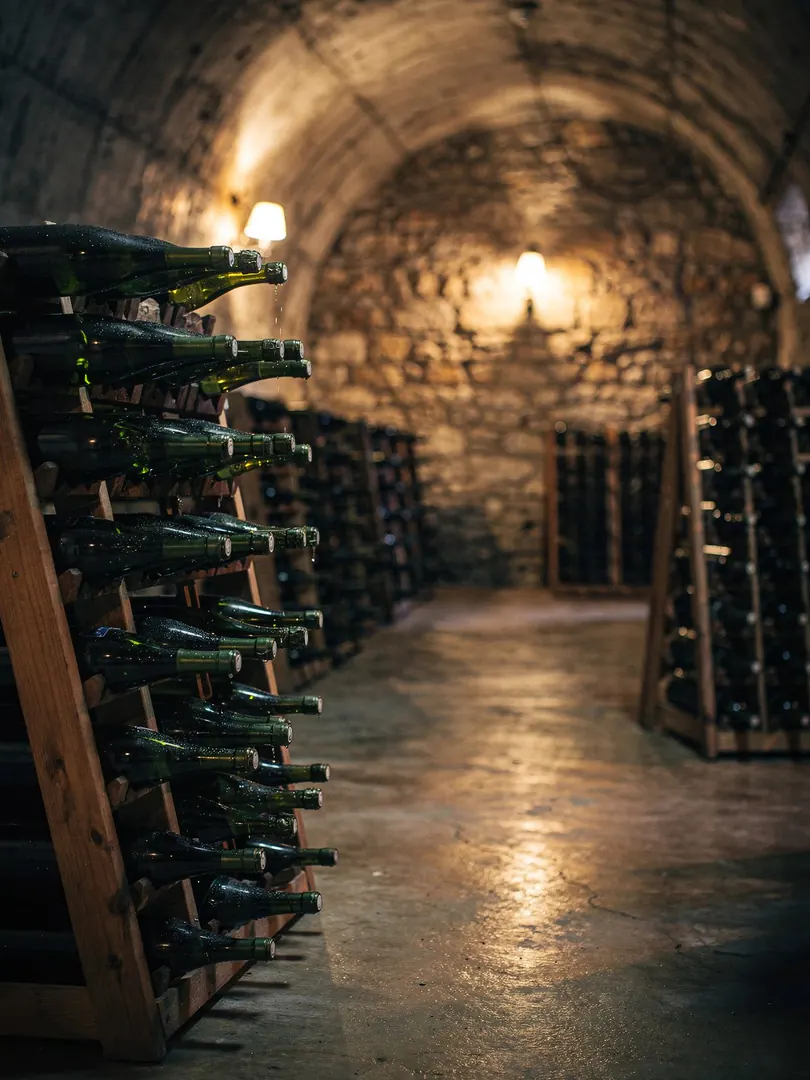
The process follows the classic path: sugar and yeast, known as the tirage or dosage de tirage, are added to the finished base wine. The bottle is then sealed with a crown cap and laid down horizontally. The yeast converts the sugar into alcohol and carbon dioxide, and the cap keeps the gas trapped in the bottle. It dissolves into the wine and later forms the bubbles.
In the process, pressure of around six bar builds up inside the bottle—roughly three times that of a car tire. This is why sparkling wine bottles are made of thick glass and have a deep punt.
Important for the wine trade: on labels for the European market, "traditional bottle fermentation" may only be stated if the wine has spent at least nine months on the lees at the same producer and was disgorged from the same bottle. The term "Champagne method" is not permitted outside Champagne. According to industry sources, the Tasmania appellation itself prescribes neither method nor aging time—that's left to the individual houses.
The profile below shows two typical styles from the island with ranges serving as a guide. The nine-month minimum comes from the EU rule; actual aging times for top wines run considerably longer.
Tasmania Brut CuvéeBottle fermentation · Chardonnay, Pinot Noir, Pinot Meunier
- Time on lees
- 9–36 Months
- Sugar
- 0–12 g/l
- Alcohol
- 11.5–12.5 % vol
Taut acidity, citrus and apple, with brioche developing over time on the lees.