Polenta, Galeto, Festa
Food & Occasion
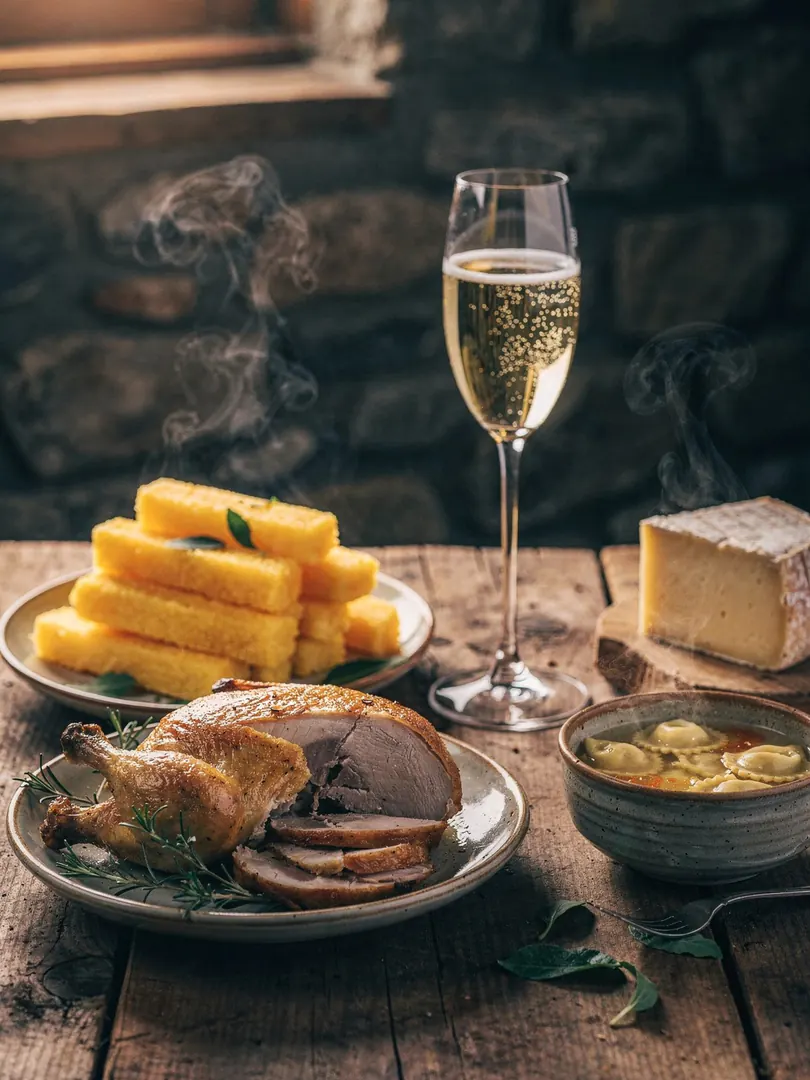
The cuisine of the Serra Gaúcha is Italian in character, just bigger and heartier. A taut, bottle-fermented Espumante pairs well with galeto al primo canto, a young grilled chicken often served as a full meal with several side dishes in the restaurants of the immigrant towns. The acidity and bubbles cut through the fat of the skin. The salt and roasted notes of the skin echo the wine's yeasty character, and the carbon dioxide refreshes the palate after every bite.
Alongside this comes polenta frita, fried cornmeal strips, crisp outside and soft inside. Here too the carbon dioxide helps by refreshing the mouth. With sopa de capeletti, the soup with stuffed pasta, a light tank-fermented Brut works better.
Queijo colonial, a robust, firm cheese in the settlers' style, and salame colonial call for a sparkling wine with some weight. Here a Blanc de Noirs made from Pinot Noir with longer lees aging can show its depth. Those who prefer something simpler can choose a fresh Brut. What matters is that the wine isn't sweet, since fat and salt pair better with acidity than with sugar.
The sweet Espumante Moscatel, on the other hand, belongs with dessert, say with fruit or a yeasted pastry like cuca. Drinking it with savory food quickly reveals that it's too sweet. With fruit, cream or almond pastries, though, its freshness balances the sugar.
Sparkling wine is celebrated all year round. Garibaldi hosts the Fenachamp, the festival of Brazilian sparkling wine, while Caxias do Sul celebrates the grape at the Festa da Uva. At New Year's, an Espumante is part of the Réveillon tradition in Brazil, with glasses already poured and ready before the countdown to midnight begins.