Three Varieties, Plus Muscat
Grape Varieties
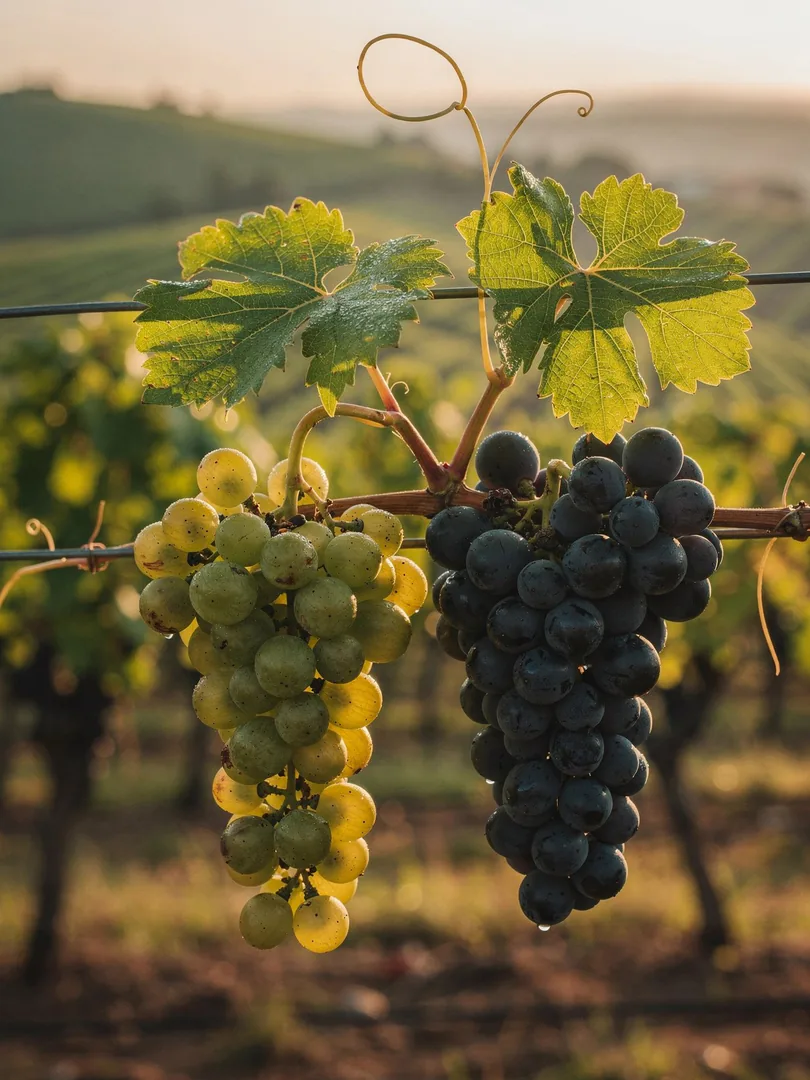
For Altos de Pinto Bandeira, exactly three varieties are permitted: Chardonnay, Pinot Noir and Riesling Itálico. In the Vale dos Vinhedos, Chardonnay and Pinot Noir are the main varieties for sparkling wine, with Riesling Itálico also allowed. This trio is familiar from Champagne, except the third variety here isn't Meunier. In the glass, the three complement each other: Chardonnay gives clarity, Pinot Noir fullness, Riesling Itálico tension.
Chardonnay contributes citrus, apple and structure. Pinot Noir, a dark-skinned grape, is pressed gently for sparkling wine to yield a clear juice and brings body and depth. A sparkling wine made purely from Pinot Noir in white style is called Blanc de Noirs, and Casa Valduga bottles one as its own Brut. The Pinot Noir variety is described in more detail in the article on Spätburgunder, as is Chardonnay in its own entry.
Riesling Itálico is not German Riesling. In German it's called Welschriesling, and it was originally introduced from Italy. It offers little aroma but plenty of acidity, which makes it useful for sparkling wine. According to one industry portal, Chandon do Brasil built the foundation of its early success on Chardonnay, Pinot Noir and this Riesling Itálico.
Then there's an entirely different group: Muscat grapes, called Moscatel in Brazil. From these comes the sweet Espumante Moscatel, which has little in common with classic sparkling wine. It's an example of how Italian immigrants recreated their homeland in the mountains, since Muscat is also at home in Piedmont.
The appellation rules deliberately leave little room for flexibility. Anyone wishing to use the DO designation must work with these varieties and cannot source grapes from other regions. This keeps the region's style legible: lean, fresh, with clear fruit.