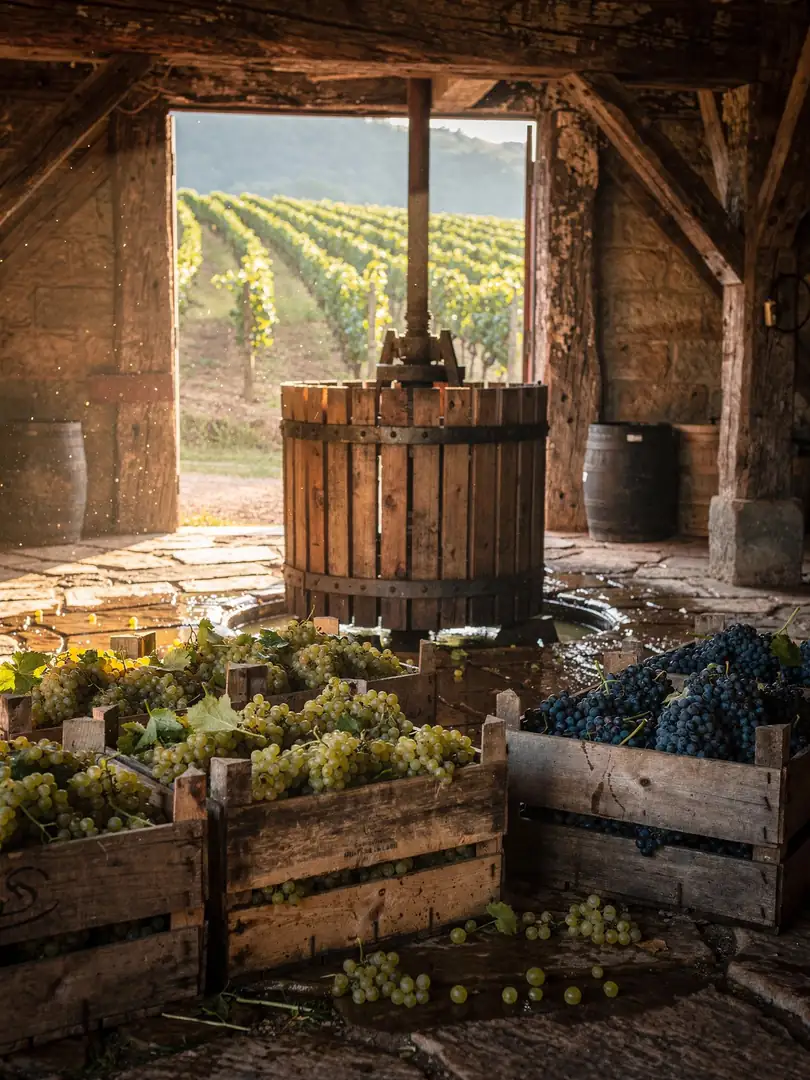
Hand Harvest in the Southern Summer
Base Wine & Cuvée
When winter sets in across Europe, harvest begins in the Serra Gaúcha. Brazil lies in the Southern Hemisphere, and grapes for sparkling wine are picked during the southern summer, typically from January onward. Early picking yields berries with plenty of acidity and little sugar — exactly what a base wine for sparkling wine needs.
In Altos de Pinto Bandeira, hand harvesting is mandatory, and the grapes may only come from within the defined area. This protects the whole berries before they reach the press. Pressing is done gently so that little color transfers from the dark skin of Pinot Noir into the juice. Experts speak of Blanc de Noirs when a dark-skinned grape is vinified white, and of Blanc de Blancs when only white varieties are used. Both styles exist in the Serra, for instance at Casa Valduga.
After that, the cellar master's work begins. From multiple lots of Chardonnay, Pinot Noir and Riesling Itálico, a cuvée is assembled — a blend meant to taste similar year after year. Most Espumantes carry no vintage, since the cuvée draws on different harvests or sites in order to preserve the house style.
Alongside these, there are vintage-dated sparkling wines, made only in particularly good years. Miolo in the Vale dos Vinhedos bottles a Millésime that the house makes only in exceptional harvests. Such wines typically rest longer on the lees, since the effort involved is greater.
The sweet Moscatel follows its own path: the must is kept cold so fermentation doesn't start too early. This preserves the grape's sugar until fermentation is stopped, and the wine retains its fresh muscat aroma.