Maultaschen and More
Food & Occasion
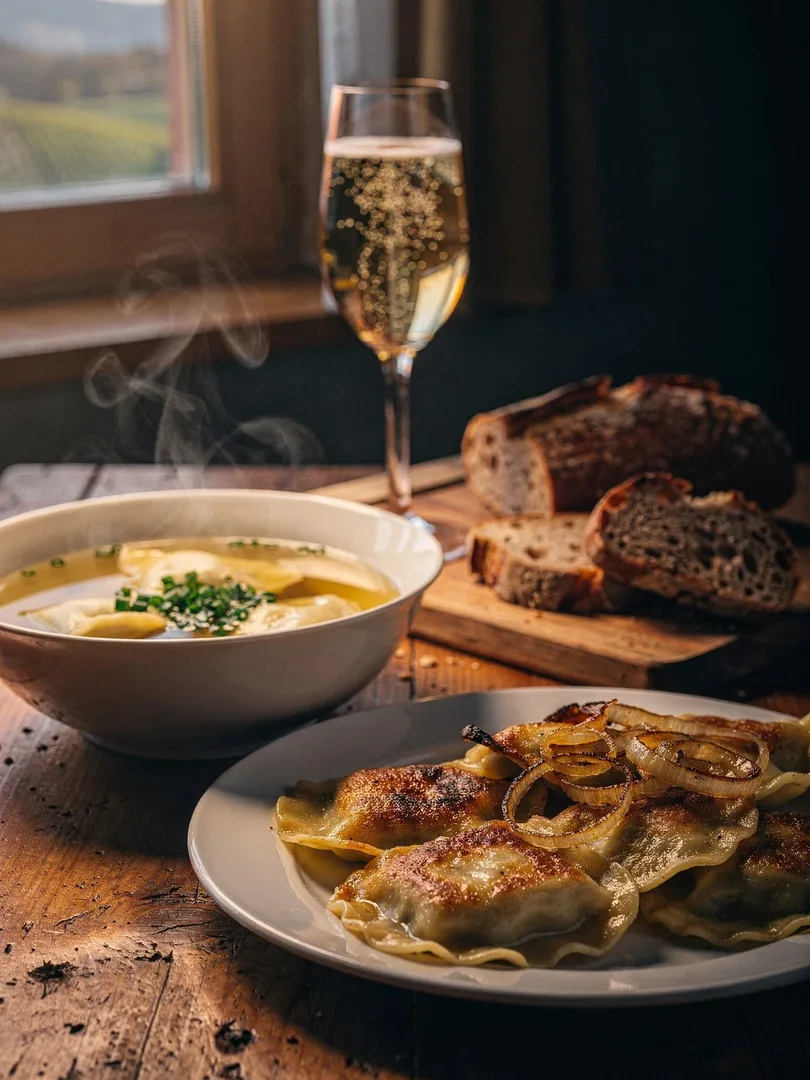
A dry Riesling sparkling wine pairs surprisingly well with Swabian Maultaschen. These pasta pockets filled with minced meat, spinach and sausage meat are served floating in broth or pan-fried with onions on the plate. The sparkling wine's acidity cuts through the fat and browned onions, while the fine bubbles lighten the dough. The name "Schwäbische Maultaschen" is a protected geographical indication.
Legend has it that monks at Maulbronn Monastery wrapped the meat in dough so that God wouldn't see it during Lent. This isn't historically documented, but the nickname "Herrgottsbscheißerle" (roughly, "little tricksters of the Lord") has endured to this day.
A Zwiebelrostbraten with crispy fried onions and Spätzle, on the other hand, calls for a sparkling wine with a bit more weight, such as a Pinot Noir Brut or a Riesling with extended lees ageing. Lentils with Spätzle and Saitenwürstle (regional sausages) pair well with a Brut whose acidity balances the smoky flavor of the sausages.
In autumn, onion tart and new wine go hand in hand. Sparkling wine makes a fine companion here, provided it's dry enough to hold its own against the sweetness of the cooked onions. A dry Brut also cuts a fine figure alongside pretzels and a hearty country loaf, since the acidity keeps the bread tasting fresh.
Occasions arise all year round — christenings, weddings, anniversaries, whether at the Stuttgart Weindorf or at home at the family table. Since the 19th century, sparkling wine from Esslingen has been part of the region's festive moments, and those who drink it this way do so in moderation, with good food and good company. In the end, what remains is a bottle from the Neckar, best enjoyed shared at leisure.