Early Harvest, Then Blending
Base Wine & Cuvée
Harvesting for the base wine along the Neckar begins weeks before the main harvest. The grapes need to be ripe enough for aroma, but should still carry plenty of acidity and relatively little sugar. By law, the cuvée must have a total alcohol content of at least 9 percent by volume; for a sparkling wine with protected designation of origin, at least 10 percent by volume must be present in the finished sparkling wine.
Much of the harvesting in the steep vineyards near Esslingen is done by hand anyway. For a Crémant, hand-harvesting is mandatory, and a German Sekt b.A. may also carry this term if it meets the conditions. These include a maximum yield of 100 liters of must from 150 kilograms of grapes.
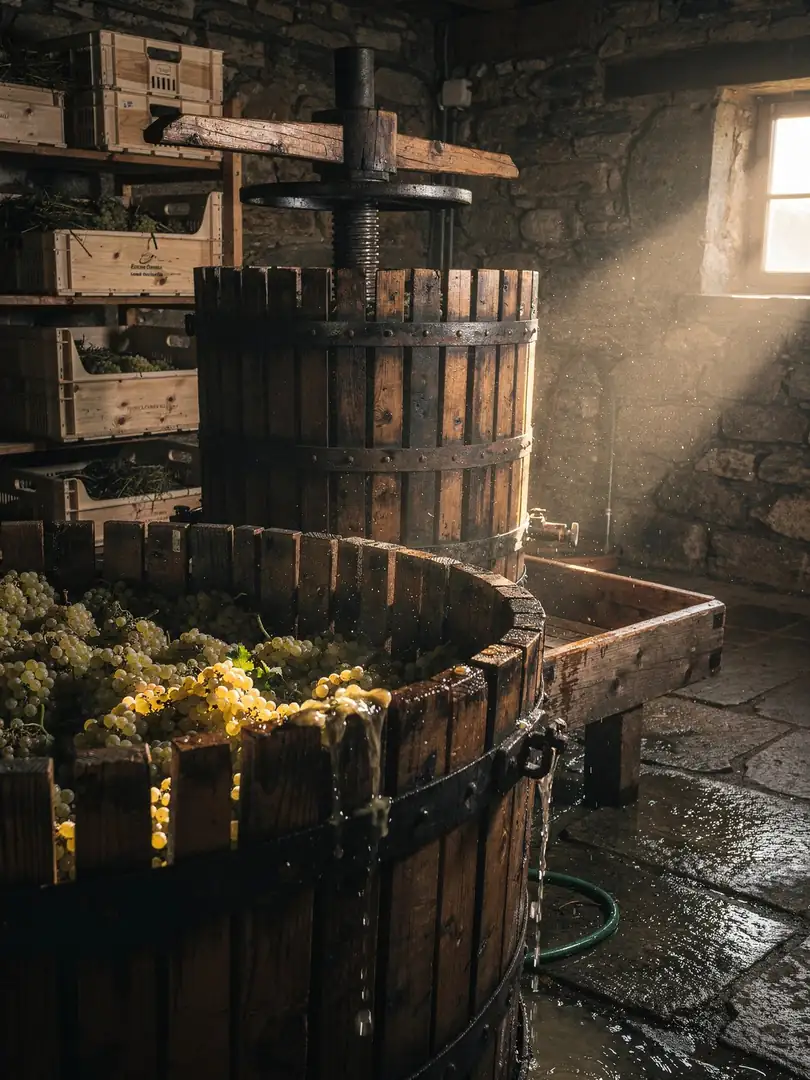
Pressing is done gently so that little tannin and no color pass into the must. This matters especially for red grapes like Pinot Noir if a Blanc de Noirs is the goal. The first, fine juice goes into the base wine, while the coarser remainder often ends up in simpler wines.
Then the real craft begins: the cuvée. The cellar master blends varieties, slopes and sometimes vintages until a style emerges that remains recognizable year after year. Reserve wines from earlier years help balance out a weaker vintage. A vintage sparkling wine, by contrast, is allowed to show the character of its particular year.
Anyone wishing to sell as Winzersekt must grow the grapes and make the wine within their own operation. A producer association may do this with its member estates. This is exactly what the winegrowers' cooperatives make use of under the Weinheimat Württemberg brand, when they produce sparkling wine from their members' grapes.