Harvest and Blending
Base Wine & Cuvée
Rheinhessen produces a great many grapes, so the question of scale comes first. A large winery making branded Sekt in bulk blends lots from many suppliers to keep the taste consistent. A winegrower making Winzersekt, say in Flörsheim-Dalsheim, uses only wine from their own estate, and the Sekt then tastes of that particular year and hillside.
Both paths begin with early harvesting. The grapes arrive in the cellar with little sugar and plenty of acidity, since the base wine should be low in alcohol. The second fermentation in the bottle raises the alcohol by roughly one to one and a half percent. Regulations allow an increase of at most 1.5 percent, so a base wine of around nine to ten percent is entirely sufficient.
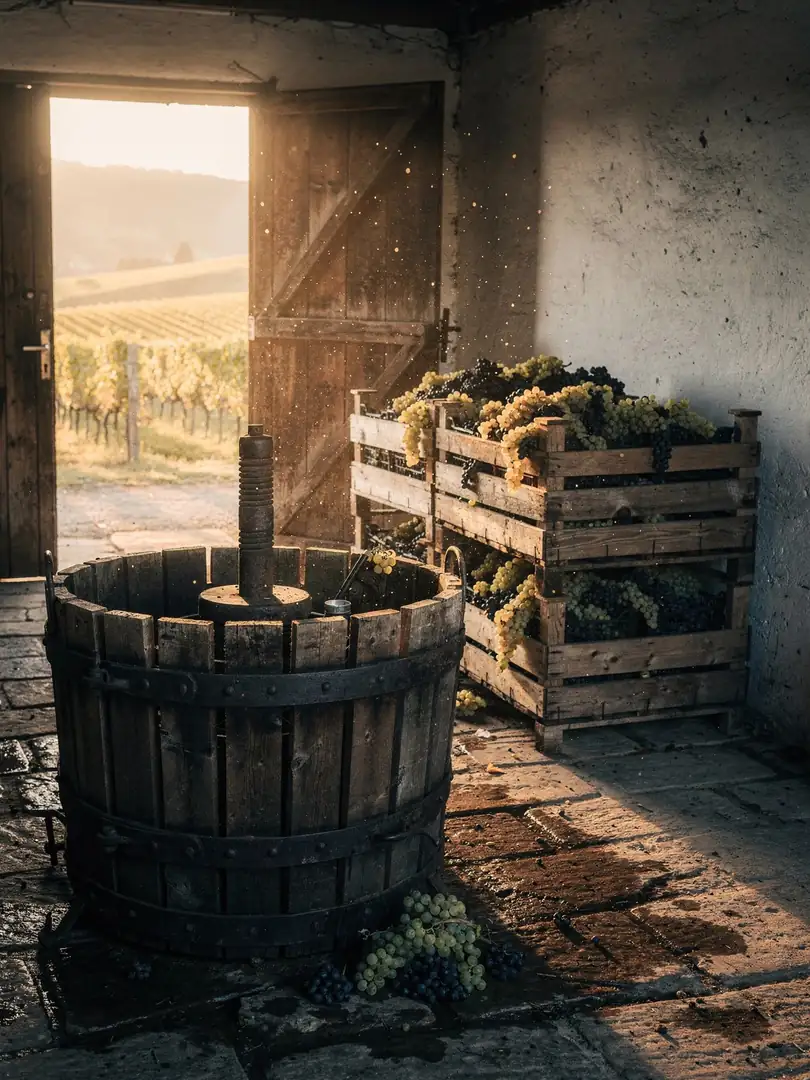
Pressing is all about gentleness. Whole clusters are pressed slowly and softly so the juice stays clear and pale. The VDP requires its Sekt to be made from estate-grown grapes pressed as whole clusters. Anyone wanting to make Crémant may extract no more than 100 liters of must from 150 kilograms of grapes. The more juice that runs from the press, the more tannins and bitterness come along with it.
Next comes blending, the assemblage. The cellar master tastes barrels and tanks of different varieties and vineyard sites and assembles the cuvée from them. Chardonnay contributes citrus and creaminess, Weissburgunder apple and nut, Spätburgunder structure and red fruit. Some houses also hold back reserve wines from older vintages, which give the Sekt stability in weaker years.
Winzersekt always carries a vintage. A non-vintage Sekt, by contrast, is often made from several harvests and follows a fixed house style that the cellar master recreates year after year. Both have their appeal, and both can be excellent. One shows what a single summer was like, the other how well a house maintains its signature style.