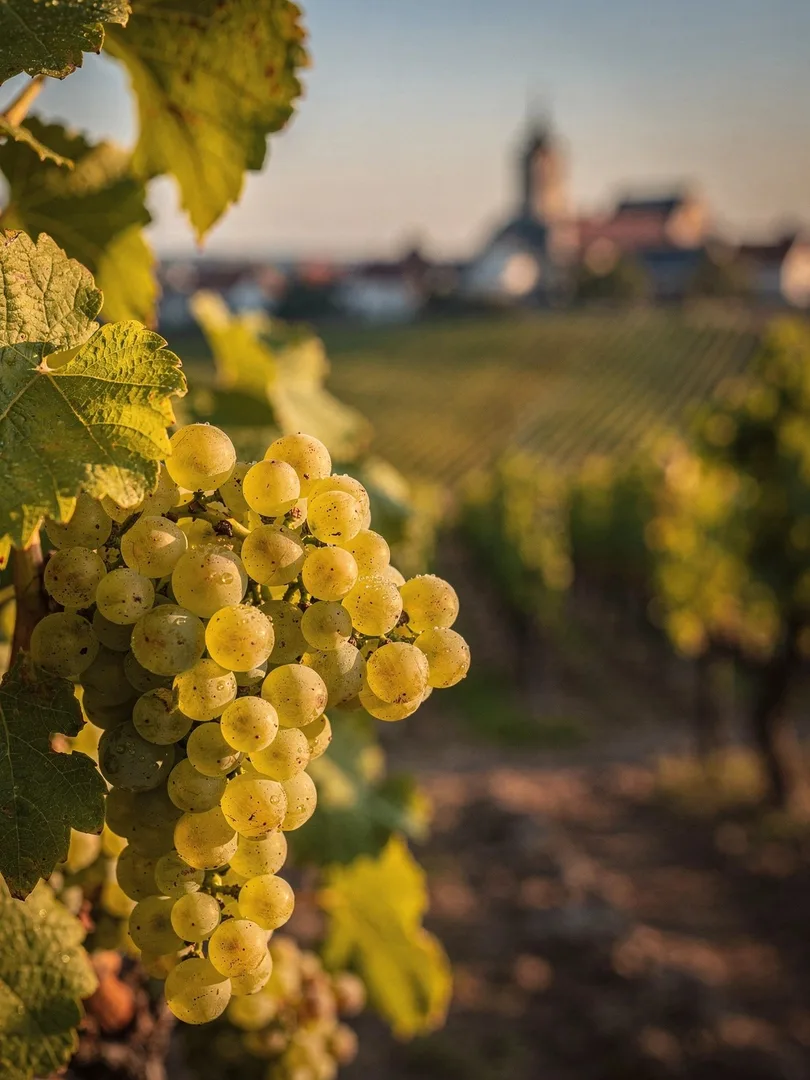
Pinot and Riesling
Grape Varieties
Rheinhessen is a region of diversity. Riesling, Müller-Thurgau, and Silvaner grow here alongside Weissburgunder (Pinot Blanc), Grauburgunder (Pinot Gris), Chardonnay, and Spätburgunder (Pinot Noir). Silvaner is considered Rheinhessen's traditional variety, and according to wine experts, the region has the largest area of Silvaner in Germany. For Sekt, however, winegrowers mainly turn to the Pinot varieties and Chardonnay.
Sekthaus Raumland, according to its own information, relies on Chardonnay, Weissburgunder, Grauburgunder, and Spätburgunder (known in France as Pinot Noir). All four have the qualities a sparkling wine needs: they bring fruit and body without becoming heavy, and they retain enough acidity when picked early. Incidentally, Volker Raumland began with a different variety—his first Sekt was a Müller-Thurgau from his parents' estate, made during his studies in Geisenheim.
Buyers of Winzersekt see the grape variety right on the label, since regulations require both grape variety and vintage to appear there. This makes the choice easy to read. A Sekt made from Weissburgunder usually tastes of apple, pear, and nut; a Chardonnay leans more toward citrus, brioche, and a touch of creaminess. Both have a calm, clear character, quite different from the loud aromatics of a Muskateller.
Spätburgunder makes Rheinhessen a home for Blanc de Noirs—white sparkling wine made from red grapes. The law permits this designation for Sekt when the red grapes are pressed like white wine and the resulting wine looks typically white. The skins release barely any color, and the wine tastes of red berries without being red.
And Riesling? It's the region's great variety, especially on the Rhine terrace with its Rotliegend soils. Its high acidity and aging potential make it well suited to Sekt, even though Rheinhessen mostly markets its sparkling wines under the Pinot varieties and Chardonnay. Those seeking variety will find Riesling Sekt and Pinot Sekt side by side on the shelf.