Loess and Limestone
Soil & Climate
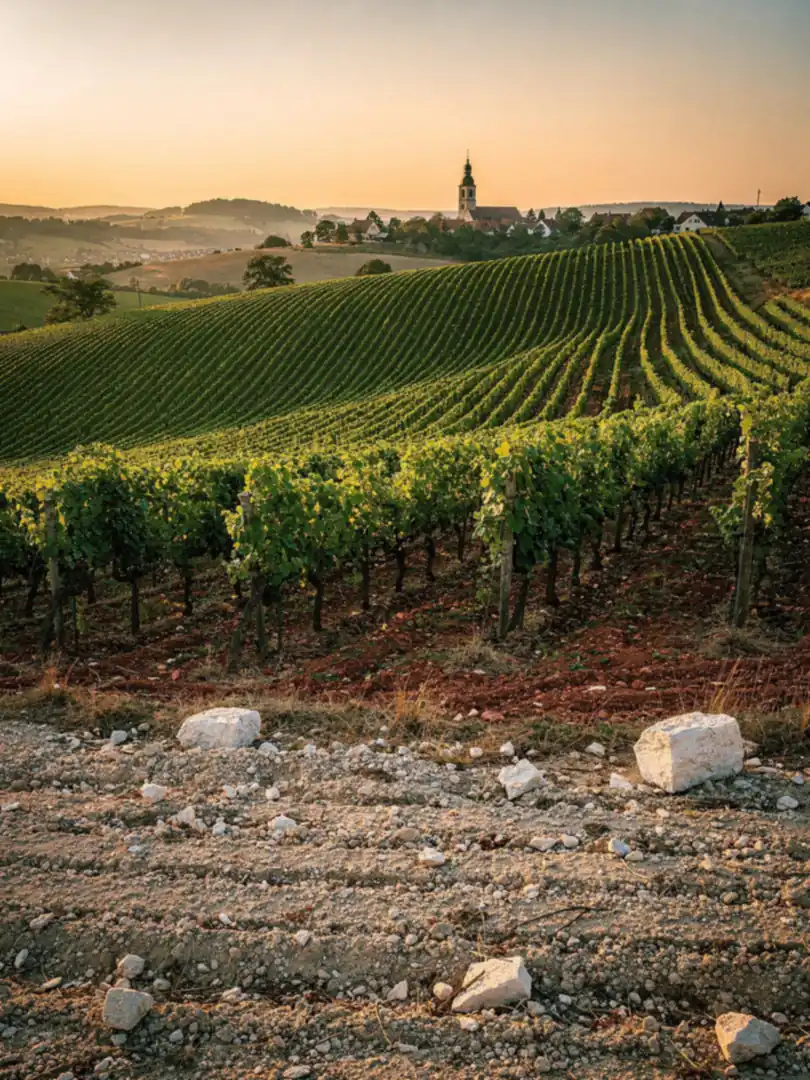
Rheinhessen lies on the left bank of the Rhine, in a triangle between Mainz, Worms, and Bingen. It ranks among Germany's driest and warmest regions. Where it's warm, grapes ripen quickly and acidity drops. Anyone making Sekt here therefore harvests earlier than for still wine, to keep the base wine fresh.
The soil changes from hill to hill. Loess, clay, and limestone often lie close together. Near the Rhine at Nierstein and Nackenheim, red Rotliegend rock also appears—an ancient stone that gives the Roter Hang its name. Loess and clay tend to yield softer wines, limestone often firmer ones. A cellar master blending lots from different soils has more colors on the palette.
The landscape is one of rolling hills, not steep slopes like the Mosel. Machines can reach almost everywhere—yet for Sekt, there's still a limit to mechanization. Anyone wanting to put Crémant on the label must harvest the grapes by hand. Many Winzersekt producers also pick their Pinot grapes into small crates by conviction, since undamaged berries release less color and fewer bitter compounds.
Beneath Mainz, an entirely different side of the terroir comes into play. The Kupferberg cellars lie beneath the Kästrich, with—according to the house—finds from Roman times and fermentation cellars from the Middle Ages. Deep underground it stays cool and steady all year round, exactly what bottles need as they slowly age on their lees.
Acidity is the backbone of Sekt. It balances the dosage and carries the wine through long aging. In Rheinhessen, this comes less from cool temperatures than from picking time: harvesting early captures acidity before the sun burns it off. This is the key move behind almost every good Rheinhessen Sekt.