Picking Early, Blending
Base Wine & Cuvée
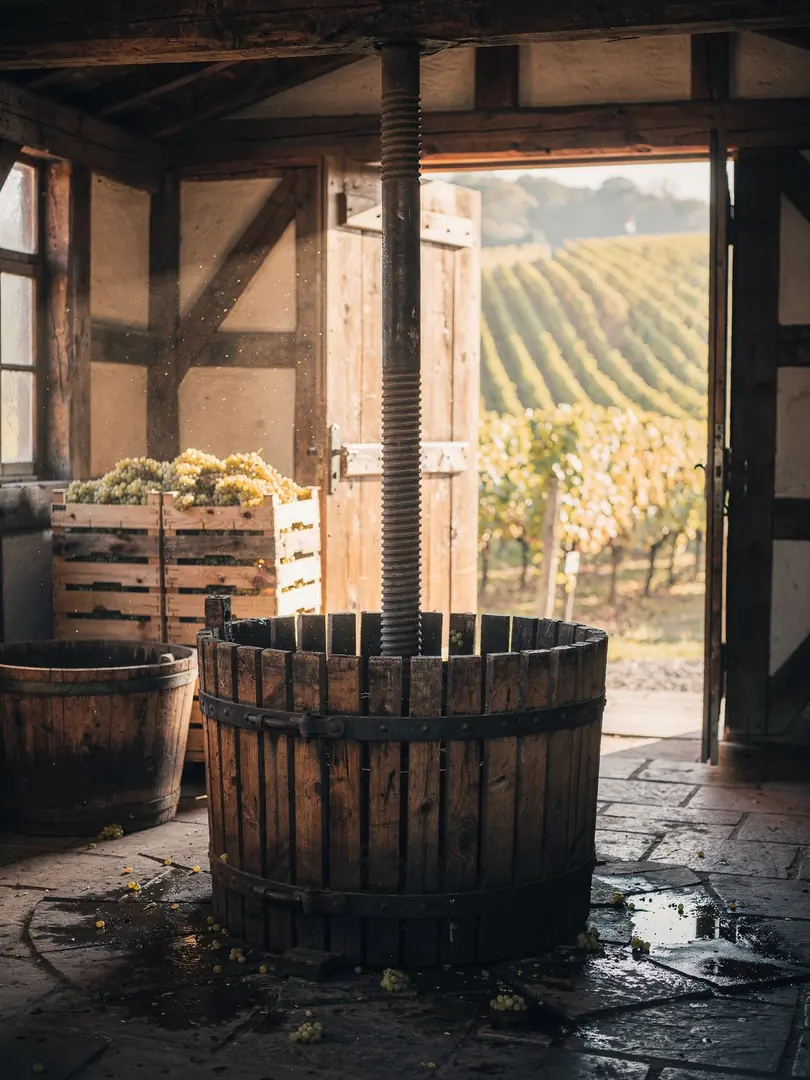
Grapes for Sekt base wine are harvested earlier than those for still wine, because at that point they carry less sugar and more acidity. The second fermentation later raises the alcohol by more than a percentage point, and a base wine picked too ripe would become heavy as a result. On the terraces of the Lößnitz, early picking preserves the acidity that later gives the Sekt its backbone — and that's exactly what matters in Radebeul.
After the first fermentation, the base wine is a still white wine with pronounced acidity. Only through yeast, time, and dosage does it become Sekt.
Cuvée means blend: according to the house, the cellar masters at Schloss Wackerbarth marry selected Saxon grapes into Sekt. Wines from different sites or varieties are balanced so the house style remains recognizable year after year. A house may also hold back reserve wines from earlier vintages for this purpose. A vintage Sekt, by contrast, carries the signature of a single year.
Wine law is strict when it comes to label statements. A Sekt b.A. with a stated grape variety can be assigned a testing number upon application, and for a Winzersekt, variety and vintage must always appear on the label. The grapes for it must come from the producer's own estate.
Blanc de Noirs is white Sekt made from red grapes vinified like white wine, often from Spätburgunder. This produces a pale color but somewhat more body than a pure Riesling Sekt.
Anyone planning Sekt for the long term plants in the vineyard. In May 2026, Schloss Wackerbarth reported planting 14,300 new vines for Sekt base wine.