Bottle, Not Tank
The Second Fermentation
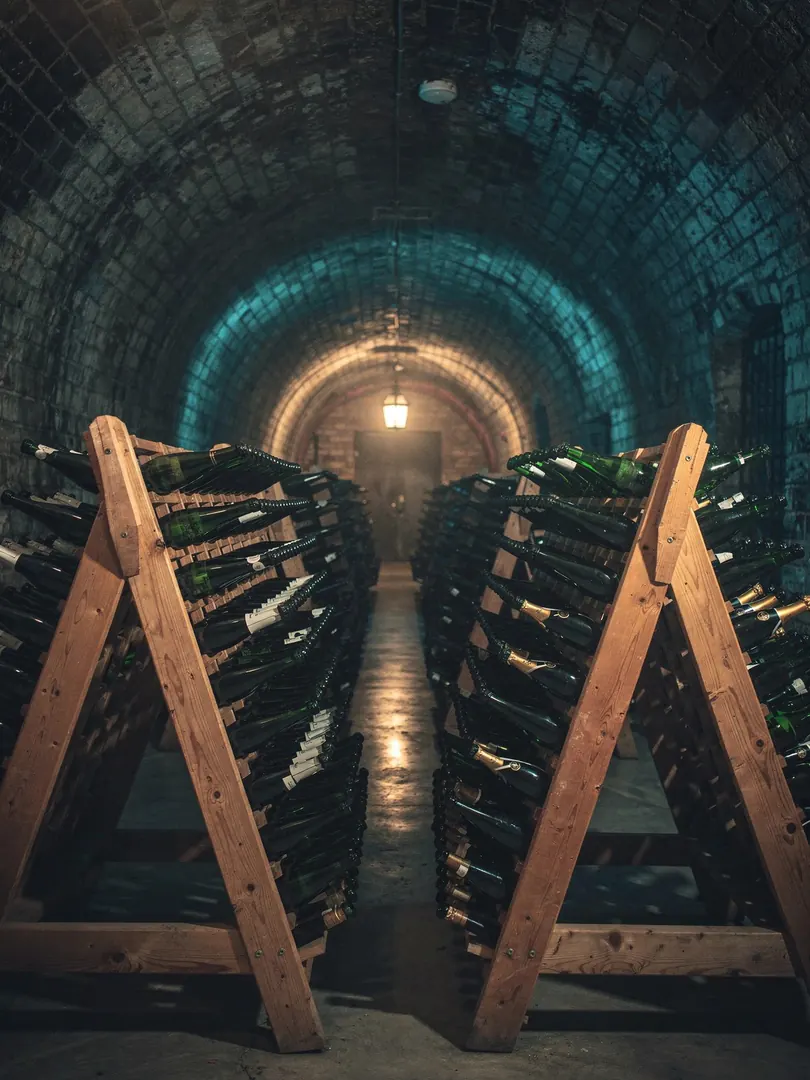
Classic bottle fermentation is the method Schloss Wackerbarth uses to make its Sekt, according to the house. The second fermentation takes place in the very bottle that later reaches shelves. How Sekt is made in Radebeul can be summed up in one sentence: sealed in glass, on the lees, with no detour through a tank.
To do this, the cellar masters fill the finished base wine, along with a little sugar and yeast, into bottles and seal them initially with a crown cap. This step is called tirage. The sugar converts into alcohol and carbon dioxide; since the gas can't escape, it dissolves into the wine and builds up pressure. For quality sparkling wine, the law requires at least 3.5 bar.
Tank fermentation works differently. There, the wine ferments in a large steel tank, and for quality sparkling wine, a production period of just six months with 90 days on the lees is sufficient — or even 30 days if a stirring device is used. The label term 'bottle fermentation' also permits transferring the wine under pressure into a tank. Only 'traditional bottle fermentation' requires the wine to rest uninterrupted on the lees in the same bottle, at the same estate, for nine months, and to be disgorged from that same bottle.
A Saxon Winzersekt can therefore only be traditionally fermented. A Sekt b.A. without this designation, however, may use other methods as well. Anyone who wants to know what's really in the bottle should check the label.
A special style is Pét-Nat, in which the first fermentation finishes inside the bottle. It has no legal definition of its own, either in the EU or in Germany. The fact sheet below shows two Saxon Sekt styles, comparing lees-aging requirements by law and typical dosage.
Sekt b.A. Sachsen, Riesling BrutBottle fermentation · Riesling
- Time on lees
- 9–18 Months
- Sugar
- 3–11 g/l
- Alcohol
- 11–12 % vol
Citrus and green apple, crisp acidity, a fine, lasting mousse.