Riesling Above All
Grape Varieties
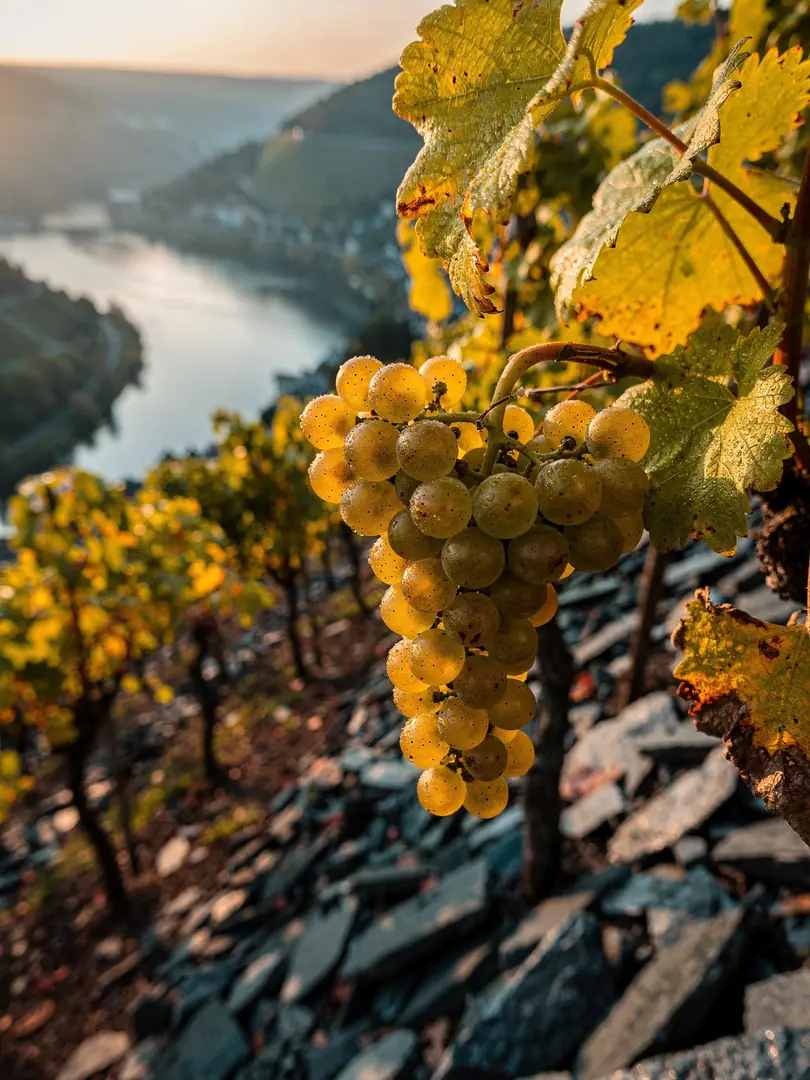
Roughly 60 percent of the Mosel's vineyard area is planted with Riesling—more than 5,000 hectares according to the statistics. Little wonder it also defines Mosel sparkling wine. Deinhard names its best-known sparkling wine Deinhard Lila Riesling Sekt, so the variety is baked right into the brand.
Riesling brings exactly what a base wine needs for sparkling wine: high acidity, low alcohol and clear fruit character. That acidity keeps the sparkling wine fresh even with some dosage and carries it through long lees aging. In the process, the wine loses its youthful austerity, the fruit recedes, and notes of bread and nuts emerge.
Unlike in Champagne, no law here prescribes particular grape varieties for Sekt b.A. The winemaker is free to choose. If the grape variety is stated on the label, the sparkling wine can likewise be granted an official quality control number on application.
Alongside Riesling, Weissburgunder (Pinot Blanc) also grows on the Mosel, with Spätburgunder (Pinot Noir) in smaller quantities. Sparkling wine made from red grapes pressed like white wine may be sold as Blanc de Noirs, provided it has the typical pale color of white wine. This means a Mosel house can offer a Pinot-based sparkling wine alongside its Riesling.
Anyone looking for a single-varietal sparkling wine will find it among the winegrowers. For Winzersekt, grape variety and vintage are mandatory on the label anyway—information often missing from branded sparkling wines without a stated variety. For a first comparison, try two sparkling wines of the same vintage, one from Riesling and one from Pinot grapes, best tasted side by side in the same glass.