Fruit and Stone
Tasting
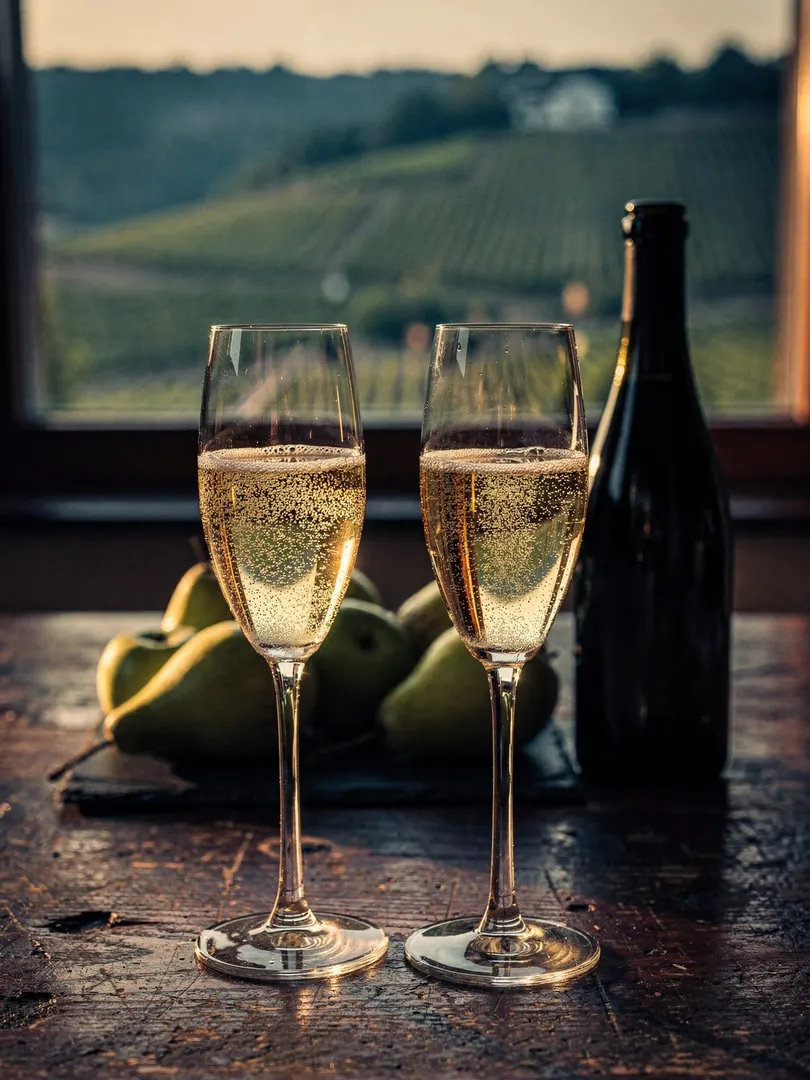
A Riesling sparkling wine from the Mosel opens with fruit and finishes with stone. One merchant describes the Scharzhofberger Riesling Sekt Brut from Bischöfliche Weingüter Trier, vintage 2019, as showing pear, apricot and yellow apple, with a finish that is pure and lightly salty-mineral.
The well-known brand is built differently. Deinhard Lila Riesling Sekt comes from Koblenz and has belonged to Peter Mertes since 2020. Agritiushof, by contrast, focuses on a Riesling Crémant Brut Nature from Devonian slate, aged at least 24 months on the lees. Comparing the two reveals just how much time and dosage can change a wine.
A white wine glass or a tulip-shaped glass works better than a wide coupe. The curve concentrates the aromas, and the bubbles rise for longer. A sparkling wine with extended lees aging benefits from a glass with a bit more bowl, so the yeasty character can fully unfold. To see for yourself, pour the same sparkling wine into a coupe and a tulip glass and compare the aroma and the mousse—you'll notice the difference immediately.
The rule of thumb for temperature is six to eight degrees Celsius (43–46°F). If the sparkling wine is warmer, the acidity feels sharper and the gas escapes too quickly. If it's colder, the aromas shut down and all you taste is the chill.
Hold the cork firmly and slowly turn the bottle rather than the cork. The pressure escapes with a quiet sigh. A loud pop wastes carbon dioxide and can even be dangerous. Afterward, pour a small amount first, let the foam settle, then top up the glass.