Tank, Bottle, Transfer
The Second Fermentation
The second fermentation is what turns still base wine into sparkling wine. The cellar master adds sugar and yeast—the tirage dosage—and the wine ferments again inside a sealed vessel. The carbon dioxide produced can't escape and dissolves into the wine; under EU law, it must come exclusively from this fermentation.
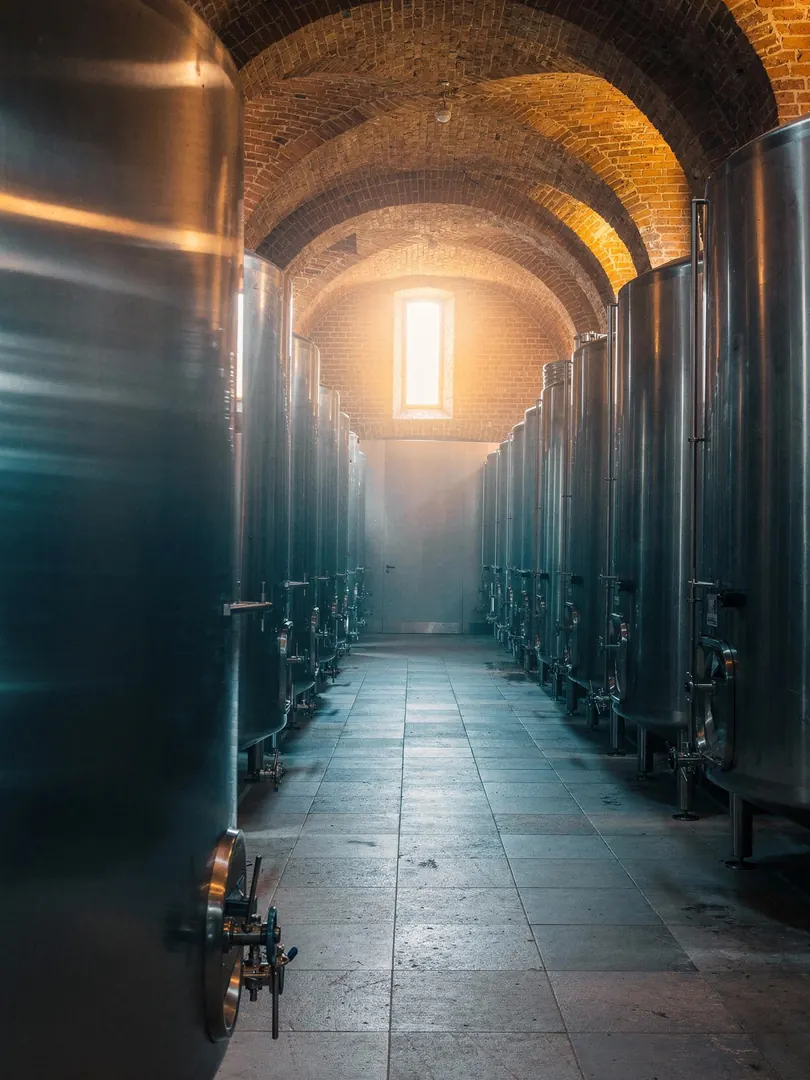
There are three methods. In tank fermentation, the process takes place in a pressurized tank, after which the Sekt is filtered and bottled under counter-pressure. Federico Martinotti patented the process in 1895, and Eugène Charmat improved and patented it in 1907. Italians therefore call it the Metodo Martinotti, while elsewhere it's known as the Charmat method.
In the transfer method, the Sekt first ferments in the bottle, is then emptied under pressure into a tank, filtered, and bottled again into new bottles. The label may then say "bottle-fermented," but not "traditional bottle fermentation." That designation requires the Sekt to rest on the lees for at least nine months within the same producer's facility and to be disgorged from the very same bottle.
For a large-volume branded Sekt like Henkell Trocken or Söhnlein Brillant, the tank method is practical, since fermentation proceeds evenly and can be cooled and controlled. Quality sparkling wine requires a minimum production period of six months. Of that, the Sekt must have at least 90 days of contact with the lees, or just 30 days if a tank with a stirring mechanism is used.
In the end, pressure is easily measured: quality sparkling wine must reach at least 3.5 bar at 20 degrees Celsius, or at least 3 bar for bottles under 25 centiliters. By comparison, Champagne reaches around 6 bar. Which method a Sekt underwent only appears on the label if it carries a protected name.
Branded Sekt TrockenTank fermentation · Base Wines of Different Varieties and Origins
- Time on lees
- 3–6 Months
- Sugar
- 17–32 g/l
- Alcohol
- 11–12 % vol
Fresh and fruity, with a gentle mousse and a delicate yeast note; here "trocken" means 17 to 32 g/l sugar.