Blending for Consistency
Base Wine & Cuvée
How does a Sekt brand like Henkell Trocken, made from many different wines, taste familiar year after year? It's blended. The cellar in Biebrich tastes lots from various sites, varieties and often several vintages, then determines the cuvée—the blend from which the Sekt will later be made.
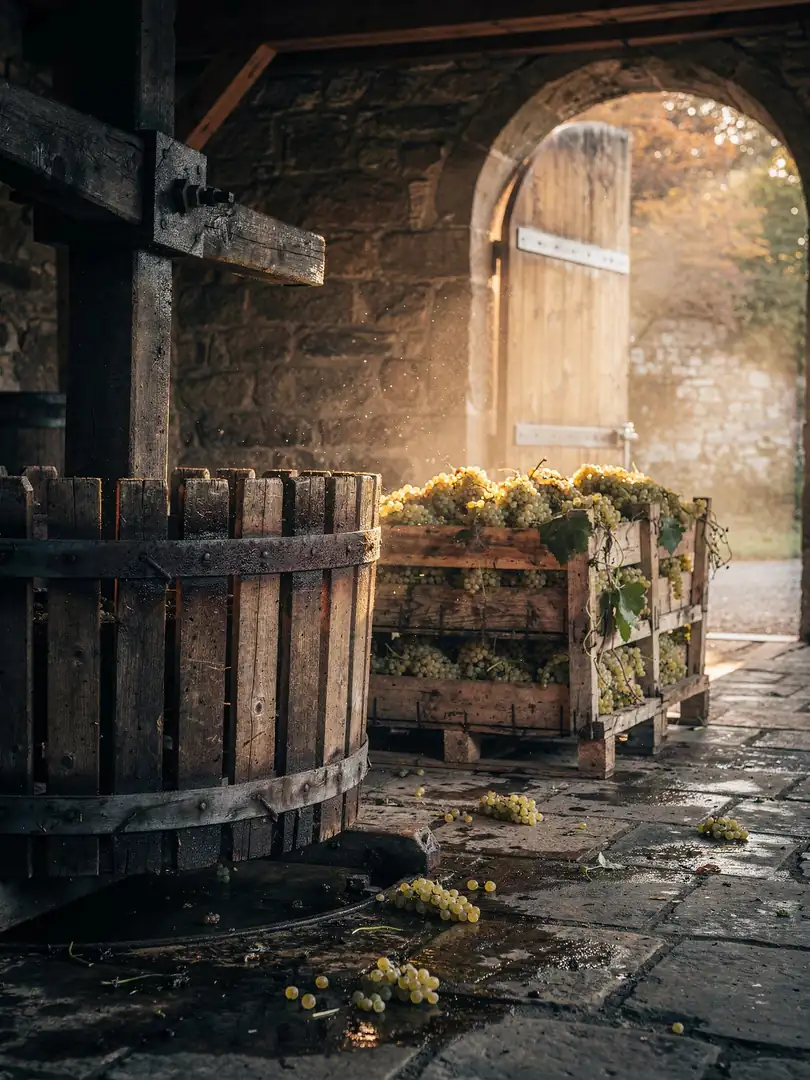
It all starts with the harvest, which comes early because acidity matters more than must weight. The grapes are pressed whole and slowly, so that little color or tannin passes into the must. The must then settles and ferments into a base wine, which is still and, on its own, often tastes tart and thin.
This base wine must reach a minimum alcohol level. The cuvée for a quality sparkling wine needs at least 9 percent ABV total alcohol; for basic sparkling wine, 8.5 percent is enough. The second fermentation later raises the alcohol content again, but by no more than 1.5 percent ABV.
Large houses keep reserve wines from older vintages on hand. These ensure the brand doesn't taste different in a weak year compared to a good one. A non-vintage Sekt therefore aims for consistency, while a vintage Sekt showcases a single year and its particular character.
Sugar isn't allowed to help at this stage. Sweetening the cuvée itself is prohibited; sweetness is only added later through the dosage at the end of aging. So if a base wine seems too thin, it has to be blended with other lots—it can't simply be sweetened with sugar.