Branded Sekt in the Glass
Tasting
A Sekt from a large Wiesbaden house tastes different from a Champagne aged for years on the lees, and that comes down to method and aging duration. Branded Sekts like Henkell Trocken, Söhnlein Brillant or Fürst von Metternich are blends crafted to taste fresh, fruity and light.
Typical aromas for Sekts of this style include green apple, citrus, pear and sometimes white blossom. The yeast note stays subtle with a short tank aging period. Alcohol typically sits between 11 and 12 percent ABV, the bubbles are fine and lively, and the dosage's sweetness rounds out the acidity.
A bottle-fermented Riesling Sekt in the Rheingau style, by contrast, tastes more austere. Citrus and apple lead the way, the acidity is firm, and after at least nine months on the lees, a subtle bread note emerges. Tasting both styles side by side quickly reveals just how much difference lees aging makes.
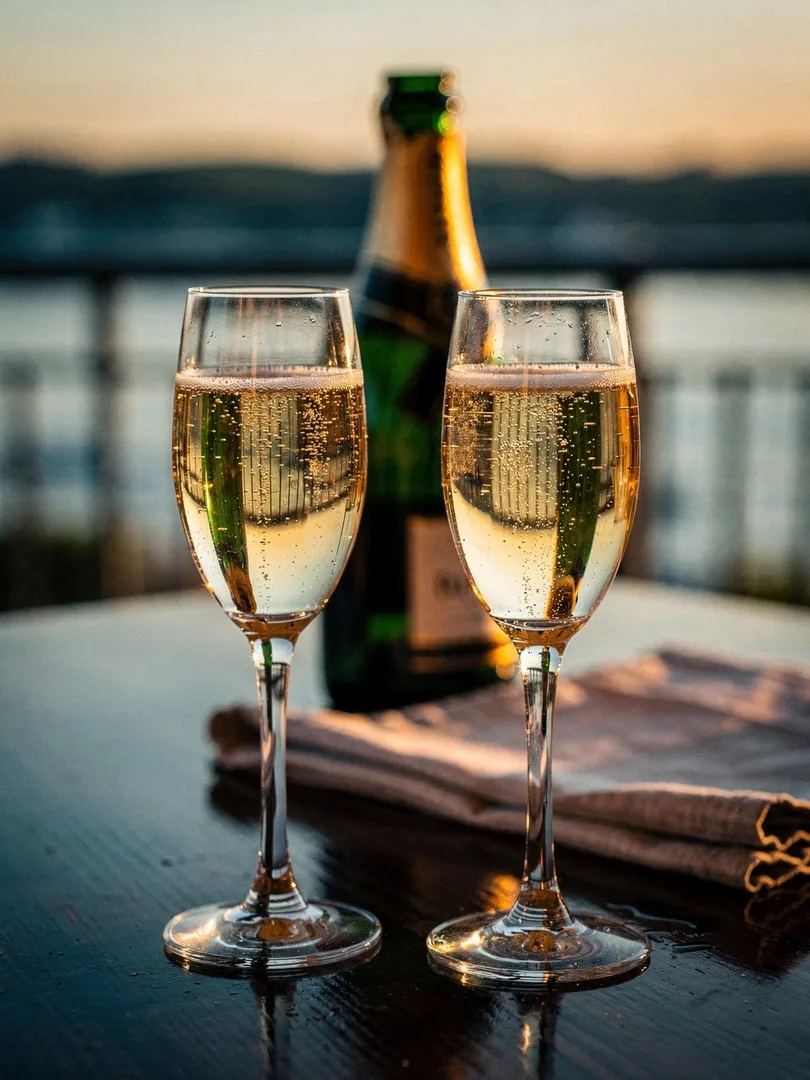
Sekt belongs in a tulip glass or a narrow white wine glass. A wide bowl lets aroma and carbon dioxide escape too quickly, while the tulip shape holds both together longer. Fill the glass only one-third to one-half full, leaving room for the aromas to develop.
Properly chilled means around 6 to 8 degrees Celsius. With a bottle of Henkell Trocken or Söhnlein Brillant, first loosen the wire cage, then turn the bottle in your hand while holding the cork steady. The goal is a quiet hiss rather than a loud pop—this preserves more carbon dioxide and prevents overflow.