Harvest and Blending
Base Wine & Blend
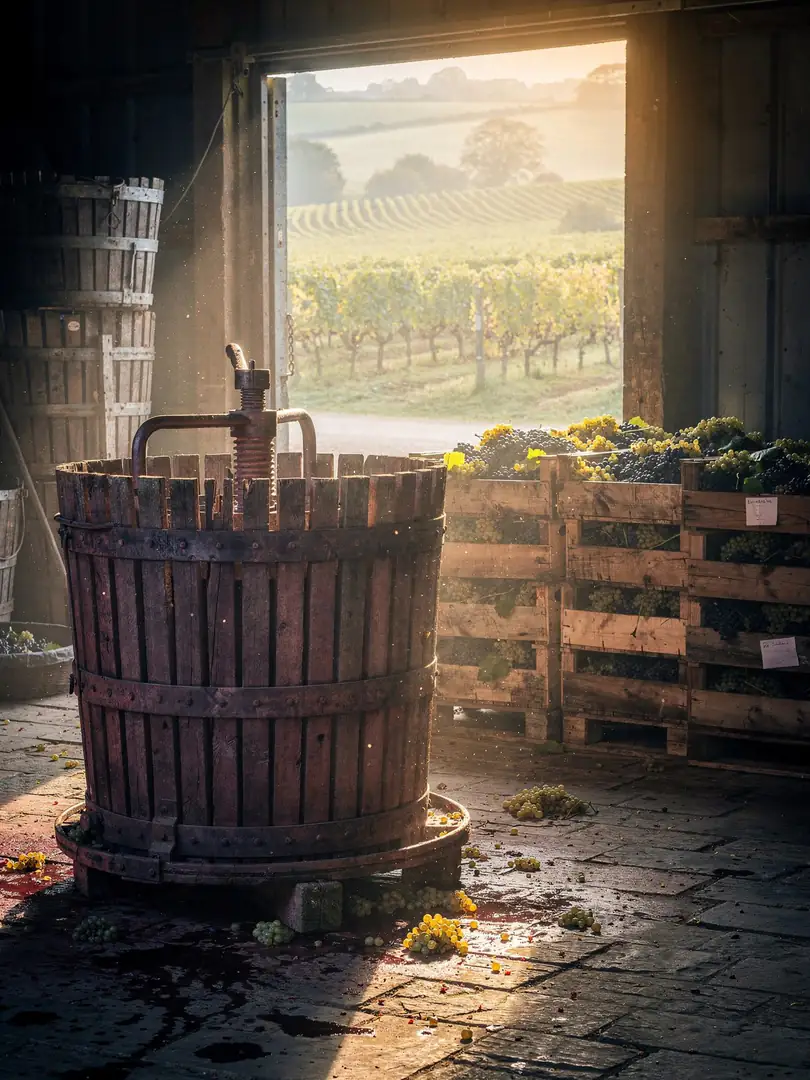
Autumn decides how a sparkling wine in Kent and Hampshire will turn out. Those making it in the Champagne style pick early, while acidity is high and sugar still low, mostly by hand into small crates so the berries stay intact. Ripe fruit alone would be too heavy; a lean base wine is needed.
The grapes are then pressed whole, gently and slowly. This is how a pale juice runs even from dark Pinot Noir berries. The first, finest portion is called the cuvée, the coarser remainder the taille. Separating the two yields purer base wines and allows for more precise blending later.
The blend, or assemblage, is where a house's signature shows. For Louis Pommery, cellar master Thierry Gasco from Reims selected from the wines that Emma Rice had vinified at Hattingley Valley in Hampshire and blended them into the first cuvée from the 2015 harvest. So a Champagne house designs the blend in England, while the wine itself is made by an English producer.
Because weather varies from harvest to harvest, houses hold back reserve wines, base wines from earlier years. These compensate for what a single vintage can't provide. Domaine Evremond's Classic Cuvée Edition I carries an edition number instead of a year, a sign that the house blend takes center stage.
A wine made solely from Chardonnay is called Blanc de Blancs, one made only from red varieties Blanc de Noirs. A blend of all three varieties, as with Evremond and Pommery, is neither one nor the other; it lives from their interplay. Hattingley Valley, which also makes wine for other houses, shows along the way just how much experience this blending demands.