Cuvée, Vintage, Reserve
Base Wine & Cuvée
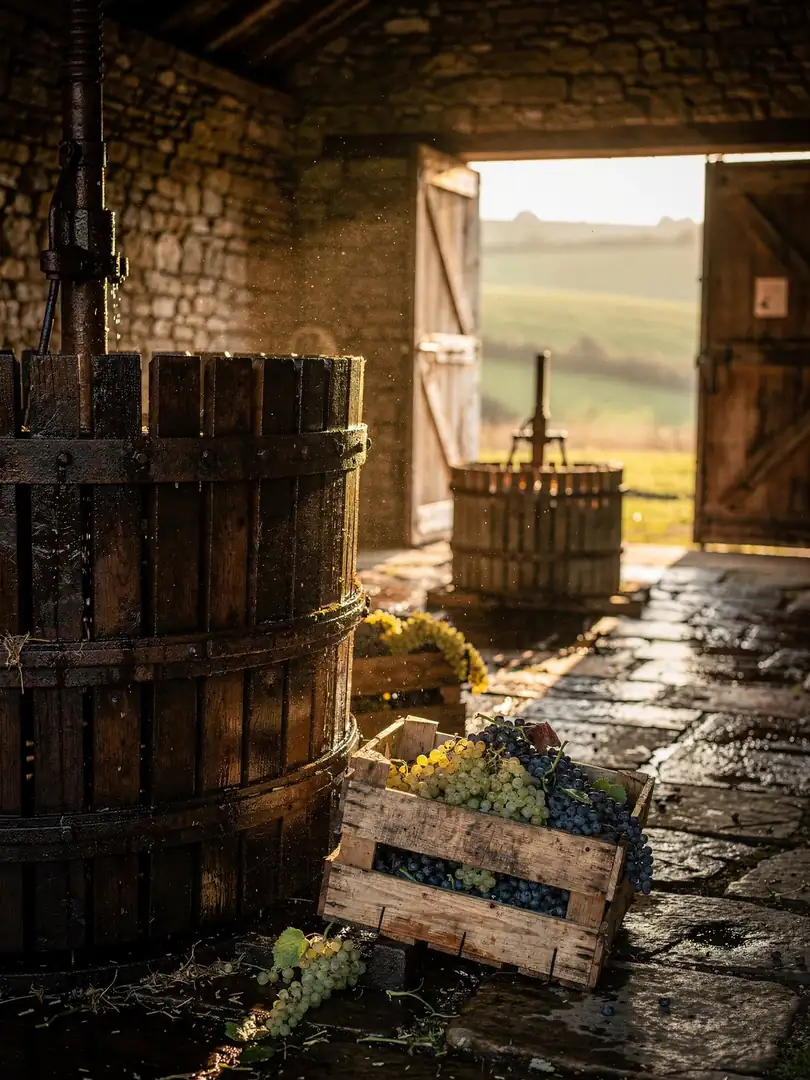
Harvest begins in the English autumn, usually in October, when the grapes have retained their acidity and the sugar level is just right. For Sussex PDO, picking is done by hand. This protects the berries and allows whole clusters to be pressed gently, without tannins from the skins passing into the juice.
The juice from the first pressing is called the cuvée, and it is the finest. What runs from the press afterwards is called the taille, stronger and more tannic. Depending on the house, the two are kept separate and blended later. These portions become still base wines, with no sparkle yet, tasting tart and acidic.
Then comes the assemblage, the blending. Nyetimber has bottled its Classic Cuvée as a multi-vintage blend since 2016, and lets it age on the lees for three years. Behind this stand reserve wines, base wines from earlier years that compensate for a weaker vintage and keep the house style consistent.
Rathfinny takes the other path: all four of the house's wines carry a vintage. For a vintage wine, under PDO rules, at least 85 percent must come from the stated year. It therefore shows the character of a single harvest, with all the variation that a cool country brings.
Colour, too, is shaped in the base wine. A Blanc de Noirs presses dark grapes so gently that the juice stays pale. Ridgeview offers such a wine under this name; it used to be called Knightsbridge. Rosé is made by both Rathfinny and Nyetimber as a wine in its own right. How much the harvest yields varies greatly from year to year in England.