Traditional Method
The Second Fermentation
English sparkling wine gets its bubbles from a second fermentation in the bottle. On English labels this is called the Traditional Method, known to us as classic bottle fermentation. For sparkling wine from Sussex, this process is mandated under the Sussex PDO, ruling out tank fermentation.
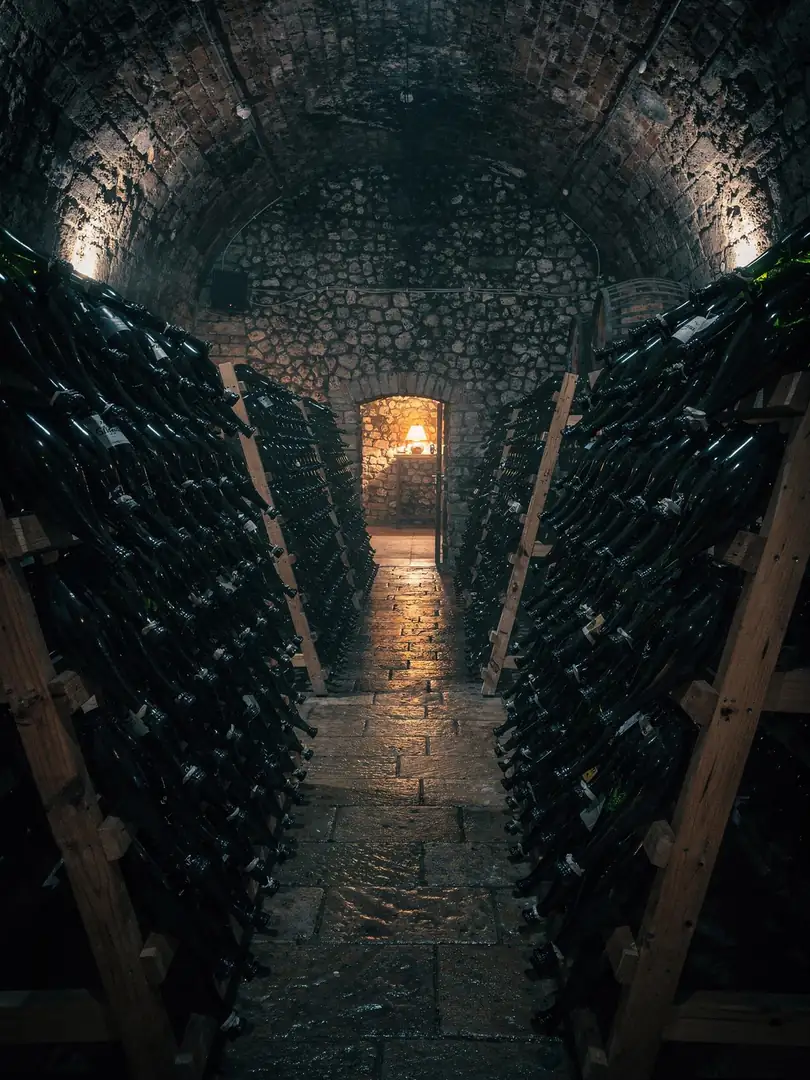
It begins with the tirage, the bottling of the finished base wine with a little sugar and yeast. The bottle is sealed with a crown cap. The yeast consumes the sugar, producing a little alcohol and carbon dioxide, which cannot escape from the sealed bottle. This builds up a pressure of several bar, considerably more than in a car tyre.
An Englishman described the process early on. Christopher Merret presented to the Royal Society on 17 December 1662 how wine merchants made wine sparkle using sugar and molasses. Ridgeview names its London cuvées Bloomsbury, Cavendish and Fitzrovia as a nod to him. Merret did not invent Champagne or bottle fermentation; he simply recorded a practice in writing.
Sussex PDO also requires that the wine remain in the same bottle in which it fermented, right up until disgorgement. This rules out transferring under pressure into a tank, the transfer method, as well as Pét-Nat, where the first fermentation finishes in the bottle.
Looking at a bottle from Sussex, you can often spot the method by its closure. During ageing, it carries a crown cap; later, a natural cork with a wire cage. The crown cap is therefore only a transitional stage, and the cork above it is the sign that the yeast has left the bottle.
Sussex PDO BrutBottle fermentation · Chardonnay, Pinot Noir, Meunier
- Time on lees
- 12–36 Months
- Sugar
- 0–12 g/l
- Alcohol
- 11–12 % vol
Citrus, green apple and brioche, taut acidity over chalky minerality.