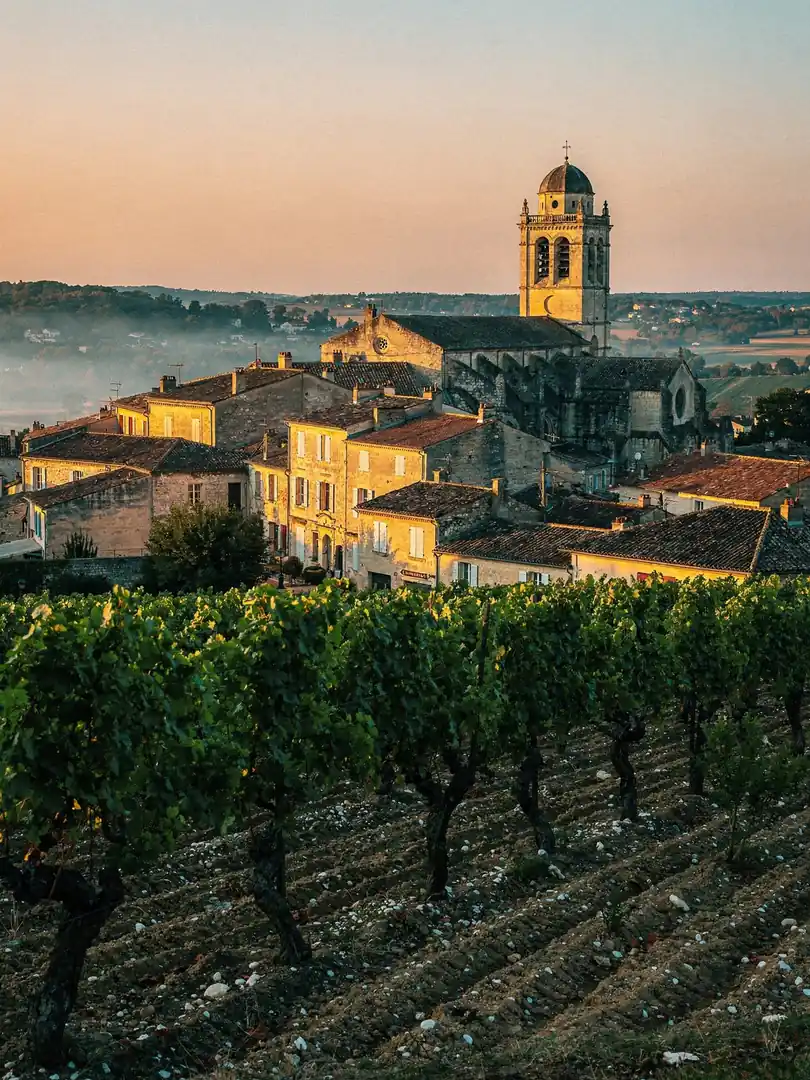
Red Meets Sparkling
Region & History
Crémant de Bordeaux sounds like a contradiction to many, since Bordeaux is known as the land of red wine. And yet, along the Garonne and Dordogne, sparkling wine is made using the Champagne method — just with Sémillon, Sauvignon and Merlot instead of Chardonnay and Pinot noir.
The roots go back to the 19th century. According to the house of Lateyron in Montagne, north of Saint-Émilion, a wine merchant was already using around three kilometers of cool tunnels for sparkling wine in 1892; the winery itself was founded in 1897.
Among the early houses is Ballarin, which, according to trade sources, was the first in Bordeaux to produce sparkling wine using traditional bottle fermentation, in 1947. Merchant houses like Calvet now offer their own Crémant de Bordeaux.
Today, Crémant de Bordeaux is one of eight French Crémant appellations, alongside Alsace, Bourgogne, Die, Jura, Limoux, Loire and Savoie. An older name for it was Bordeaux mousseux. On the label, "Crémant" always appears together with the appellation name, never alone.
Wine from across the entire Bordeaux wine region can be used for this name, from the Médoc to the Entre-Deux-Mers. Unlike in Champagne, there's no small, tightly defined core zone. A Crémant from Saint-Émilion can therefore taste different from one from the Entre-Deux-Mers, since soil and grape varieties shift with the slope.
Far to the southeast, on the Tarn river near Albi, lies Gaillac. Benedictine monks from the Abbey of Saint-Michel are said to have revived winemaking there in the 10th century, and winemakers cite sources from 1591 for their sparkling wine. Whether this was already made in today's style remains a matter of tradition. Gaillac relies on Mauzac, a variety also known from Limoux. Head to Gaillac, and you'll find a sparkling wine that has little to do with Crémant: it undergoes just a single fermentation, which finishes right in the bottle.