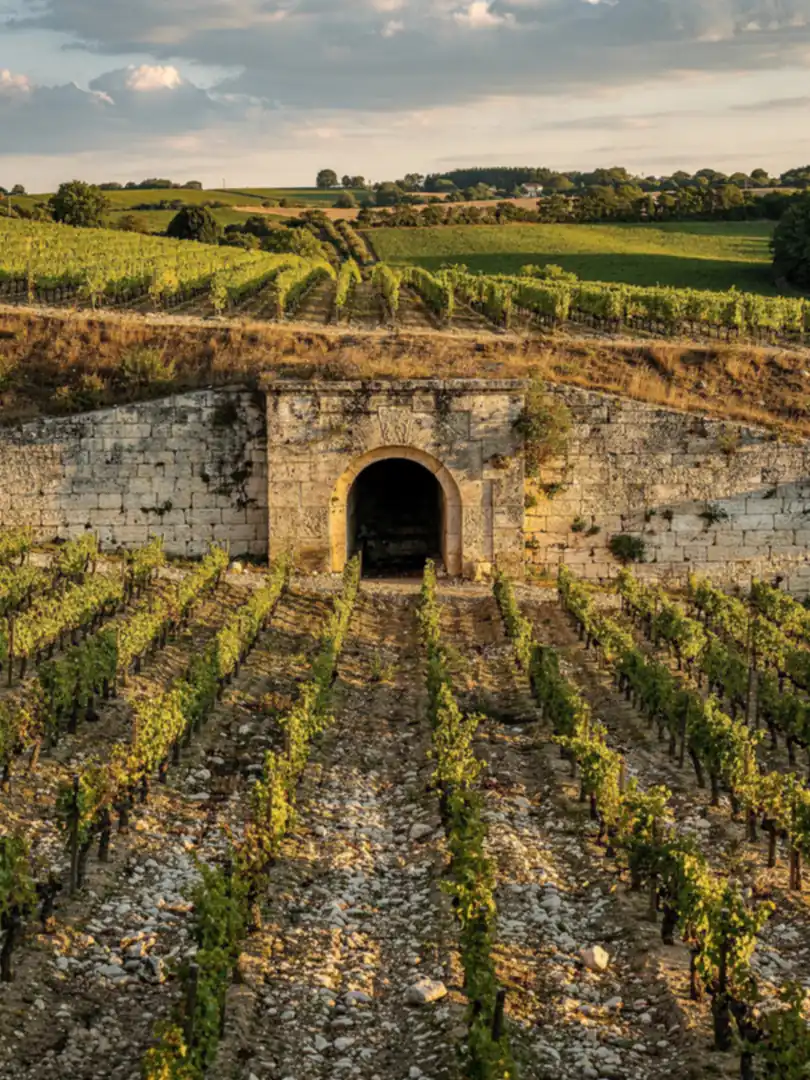
Limestone and the Atlantic
Soil & Climate
The Atlantic and the funnel-shaped Gironde estuary shape Bordeaux's climate. Winters are mild, the weather changeable, and in summer the fruit usually ripens without much trouble. For red wine, that's a gift. For sparkling wine, something else matters most: freshness. The grapes are picked earlier than for still wine, while acidity is still high and sugar levels are still low.
The soil shifts from hill to hill. In the Médoc lie gravel beds, once deposited by rivers. Gravel stores the day's warmth, while limestone gives wine freshness and lift. Around Saint-Émilion, vines grow on limestone and clay, and in the Entre-Deux-Mers, the land between the Garonne and Dordogne, clay dominates alongside limestone and gravel.
The ground around Saint-Émilion is especially distinctive. The limestone was quarried over centuries, and in these quarries and tunnels it stays cool and damp all year round. According to the house of Lateyron in Montagne, around three kilometers of passages run underground there. The house of Cloître des Cordeliers sits right in the heart of Saint-Émilion, in the ruins of a Franciscan monastery.
Unlike Champagne, Crémant de Bordeaux has no ranked, named vineyard sites. What matters is that the grapes arrive early and healthy, and that the wine doesn't warm up in the cellar. A cool cellar lets the yeast work slowly, giving the wine time.
Gaillac lies far inland on the Tarn. On one bank, gravel and clay form old river terraces; on the other, vines grow on hills of limestone and clay. The climate blends Atlantic and Mediterranean influences, with warm summers. That suits Mauzac, which needs sun and time.