Gentle Pressing
Base Wine & Blend
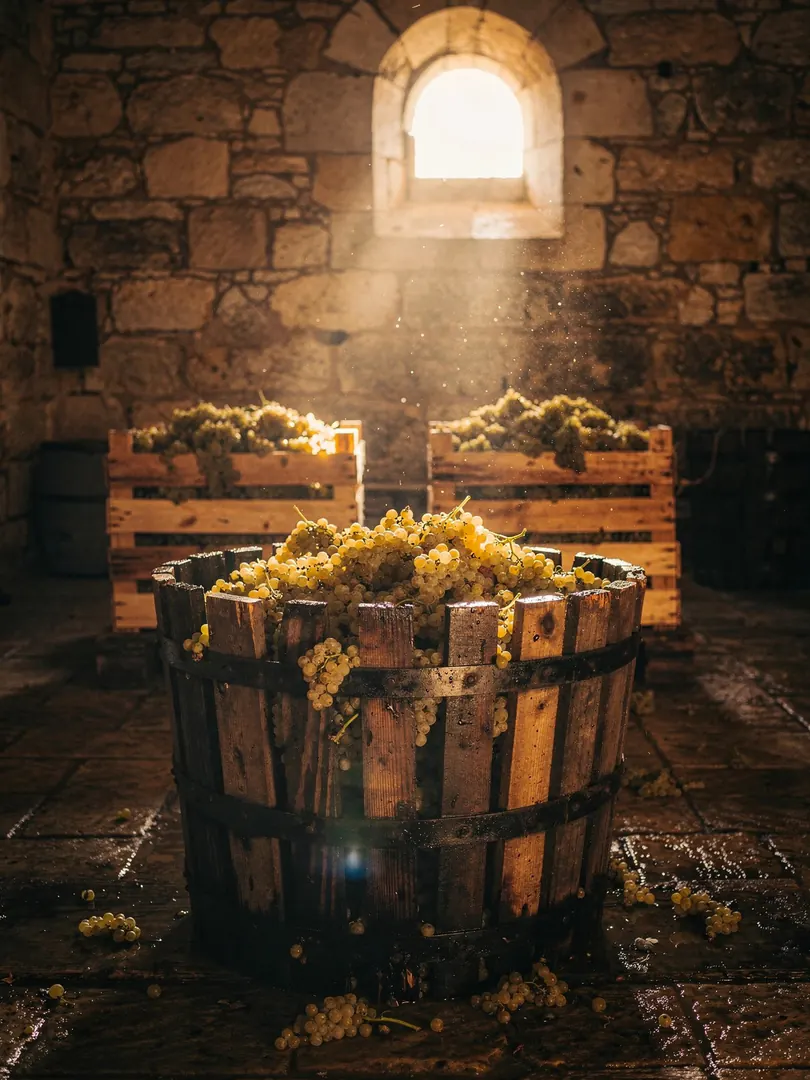
Harvest for sparkling wine begins earlier than for red wine, even around Saint-Émilion, and it's done by hand. That's what the name Crémant requires: the grapes go into the press whole or destemmed, and from 150 kilograms of harvested grapes, no more than 100 liters of juice may be extracted. The first pressing yields the finest juice, leaving behind the harsh tannins from skins and seeds.
Gentle pressing yields pale juice. Press too hard, and the juice takes on color and a bitter edge. This matters especially with red grapes: Merlot or Cabernet franc release their color through the skins, and if the juice runs off the skins quickly, the must stays nearly colorless. This is how red grapes can produce a white base wine or, with a bit more skin contact, a pale rosé.
As a base wine, the result looks rather unremarkable. To qualify as a sparkling wine with protected origin, it must have at least 9% total alcohol by volume; tasted on its own, it often comes across as tart and plain — and that's exactly the point. The second fermentation raises the alcohol by up to another 1.5% and gives the wine its bubbles.
The real artistry lies in the blend, the assemblage. How much Sémillon rounds out the wine, how much Sauvignon keeps it taut, and does it need a splash of Merlot for fruit? Whether a house also blends in wines from older vintages is entirely up to them.
In Gaillac, none of this applies. For the méthode ancestrale, there's no finished base wine that's later reassembled. The must begins fermenting, gets bottled before fermentation finishes, and continues fermenting in the bottle without any added sugar. Everything that matters is therefore decided at harvest and at the moment of bottling.