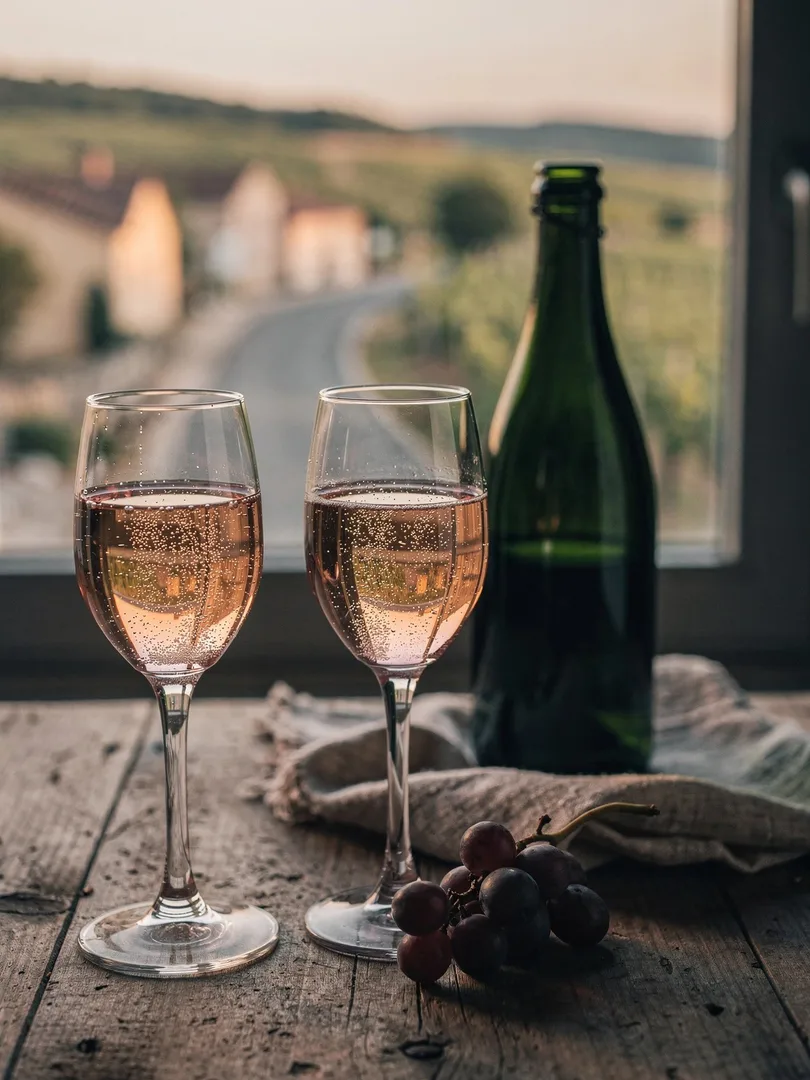
Red fruit
Tasting
A champagne from the Côte des Bar typically shows red fruit—cherry and strawberry—paired with brioche notes from lees aging. Because Pinot Noir here is often described as light-footed, the wine frequently feels leaner than you'd expect from so much red grape.
Four houses serve as flavor examples here. Drappier's Carte d'Or has, according to the house, been part of the range since 1952 and carries a strong Pinot Noir imprint. Fleury's Fleur de l'Europe is a Brut Nature from biodynamic farming.
Devaux's Cuvée D blends 70 percent Pinot Noir with Chardonnay, while Cédric Bouchard's Roses de Jeanne showcase the Pinot Noir of a single parcel with no blending at all. Taste all four side by side, and you'll see just how wide the stylistic range here really is.
A tulip glass or a wide white wine glass works better than the flat coupe. In the tulip, the aromas gather and the bubbles rise slowly without the wine warming too quickly. Red fruit especially needs room to open up.
Serve chilled to around 8 to 10 degrees Celsius. This keeps the carbon dioxide dissolved and the aromas fresh. Vintage champagnes can be served a touch warmer, letting spice and bottle age come through. An hour in the fridge is enough; an ice bucket works better than the freezer.
When opening, hold the bottle at an angle, thumb over the cork, and turn the bottle rather than the cork. It should give way with a quiet sigh, not a loud pop. That way, the foam stays in the bottle and the bubbles stay in the glass.