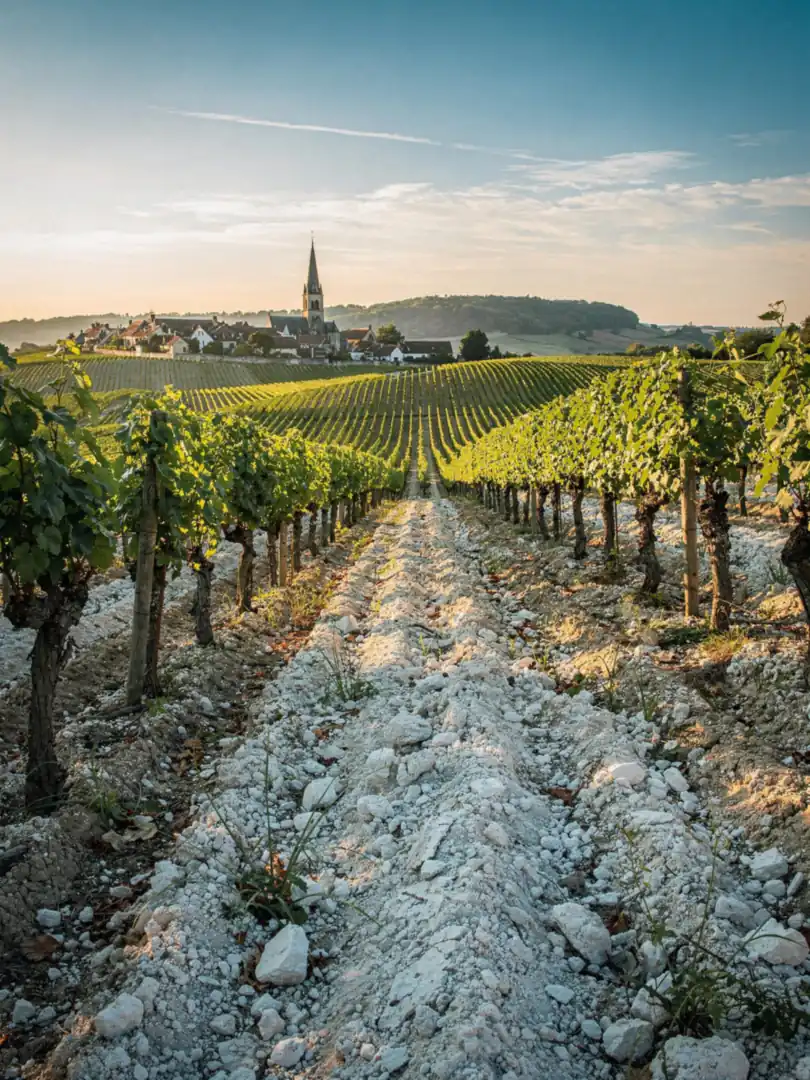
Chalk Beneath the Vines
Soil & Climate
Dig a few centimeters into a vineyard near Cramant and you'll hit chalk. It lies almost directly beneath the surface and links all the villages of the Côte des Blancs, even as slope height and aspect shift. The roots of the Chardonnay vines grow into this porous rock, which holds water and releases it again during dry spells.
Champagne's climate is cool, and the vines here ripen right at the edge of what's still possible. The grapes therefore accumulate less sugar than in warmer regions and retain their acidity. For sparkling wine, that's an advantage, since the acidity carries the wine through years on the lees that follow.
Chouilly and Oiry in the north lie closest to Épernay. Cramant, Avize, Oger, and Le Mesnil-sur-Oger form the heart of the Côte, with Vertus following further south. Growers like to compare the villages: Oger is considered broader and fuller, Le Mesnil tauter and especially age-worthy. These are rules of thumb from experts, not strict rules.
Unlike Burgundy, Champagne ties Grand Cru rank to the village. Differences within a single village only become visible at the level of individual plots, like the Clos du Mesnil. The wall around its 1.84 hectares makes it a unit that can be harvested, pressed, and bottled separately.
What the vines carry above ground, the cellars hold below. In the Côte des Blancs, too, cellars are cut into the chalk rock, staying cool year-round and letting bottles rest undisturbed for years until a cellar master brings them out for riddling.