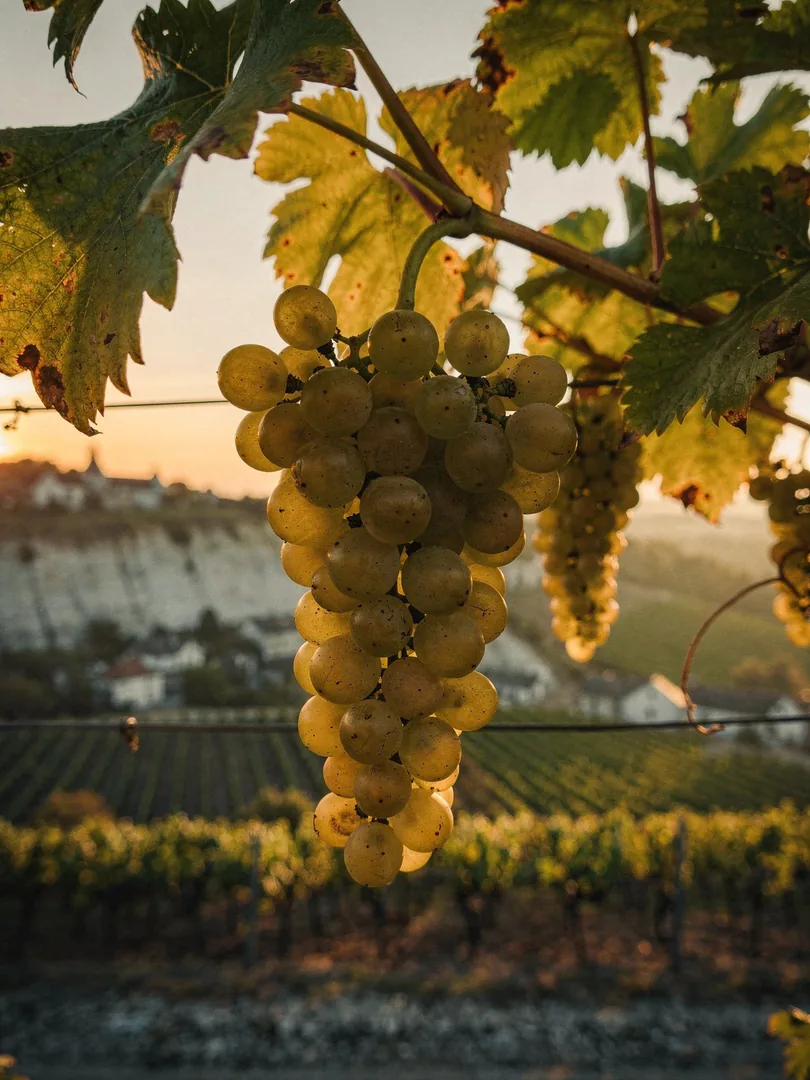
Almost Entirely Chardonnay
Grape Varieties
Nearly every vine in the Côte des Blancs is Chardonnay. Around 95 percent of the planted area carries the white variety that gave the region its name. Pinot Noir and Meunier, Champagne's red varieties, barely grow here; they belong on other slopes.
Chardonnay has a delicate scent of lemon, green apple, and white blossom, never heavy or sweet. On chalk and in a cool climate, it retains a taut acidity, exactly what sparkling wine needs when it's meant to rest on the lees for years. With age, notes of brioche, nuts, and honey emerge.
Because no Pinot Noir steps in with body and fruit, each village shows its profile especially clearly. A pure Chardonnay gives the soil little chance to hide. That makes Blanc de Blancs demanding, but also easy to compare: two wines from Cramant and Oger taste distinctly different, even though they come from the same grape.
Champagne's appellation rules allow eight main varieties: Chardonnay, Pinot Noir, Meunier, Pinot Blanc, Pinot Gris, Arbane, Petit Meslier, and Chardonnay Rose. In practice, three dominate, and in the Côte des Blancs there's barely room for the rest.
The counterpart to Blanc de Blancs is Blanc de Noirs, a white Champagne made from red grapes. Both terms describe the grape, not quality or sweetness. A Blanc de Blancs can be brut, extra brut, or sweeter.