Citrus and Chalk
Tasting
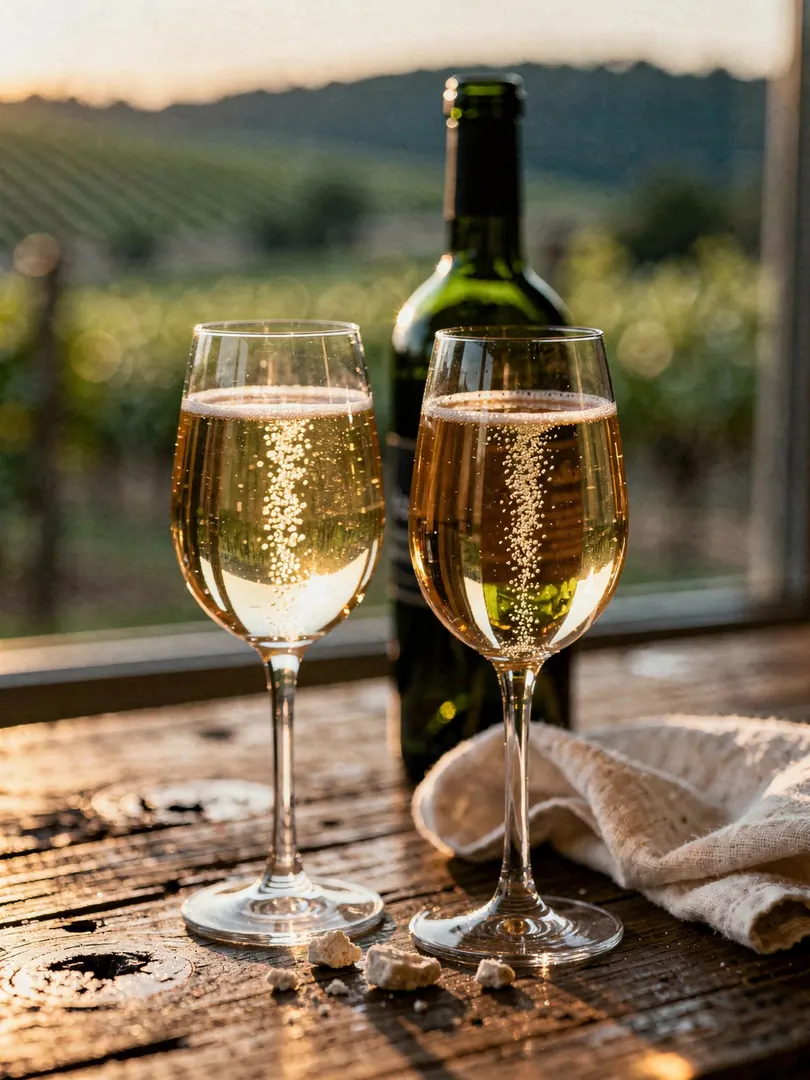
In the glass, a Blanc de Blancs from the Côte des Blancs typically shows pale yellow with greenish reflections and fine, persistent bubbles. The nose leans toward lemon, green apple, and chalk, with brioche and hazelnut emerging as it ages. On the palate it feels taut and clear, and the acidity carries the flavor long on the finish.
Salon from Le Mesnil-sur-Oger shows this style as a pure vintage wine, Krug Clos du Mesnil as the wine of a single plot. Avize is home to two grower houses often mentioned together: Jacques Selosse, with its Burgundy-trained style, and Agrapart, whose wines experts compare to Selosse's even though they taste quite different.
A tulip glass or a fine white wine glass works better than the flat coupe. The coupe lets aroma and carbon dioxide escape quickly, while the tulip holds both together and concentrates the scent at the opening.
Served too cold, the aromas stay closed; too warm, and the wine feels flat. A good benchmark is eight to ten degrees Celsius, with vintage Champagne allowed a touch warmer in the glass. Typical alcohol content is around 12 to 12.5 percent.
When opening, first remove the foil, then loosen the wire cage, the agraffe, keeping your thumb on the cork the whole time. Hold the bottle at an angle, pointing away from yourself and others, and turn the bottle slowly rather than the cork. It should hiss softly, not pop loudly. A Blanc de Blancs rewards patience: let it sit in the glass for a moment, and you'll first smell the citrus notes, then, after a few minutes, the pastry and nut aromas.