Rose, Citrus, Sweetness
Tasting
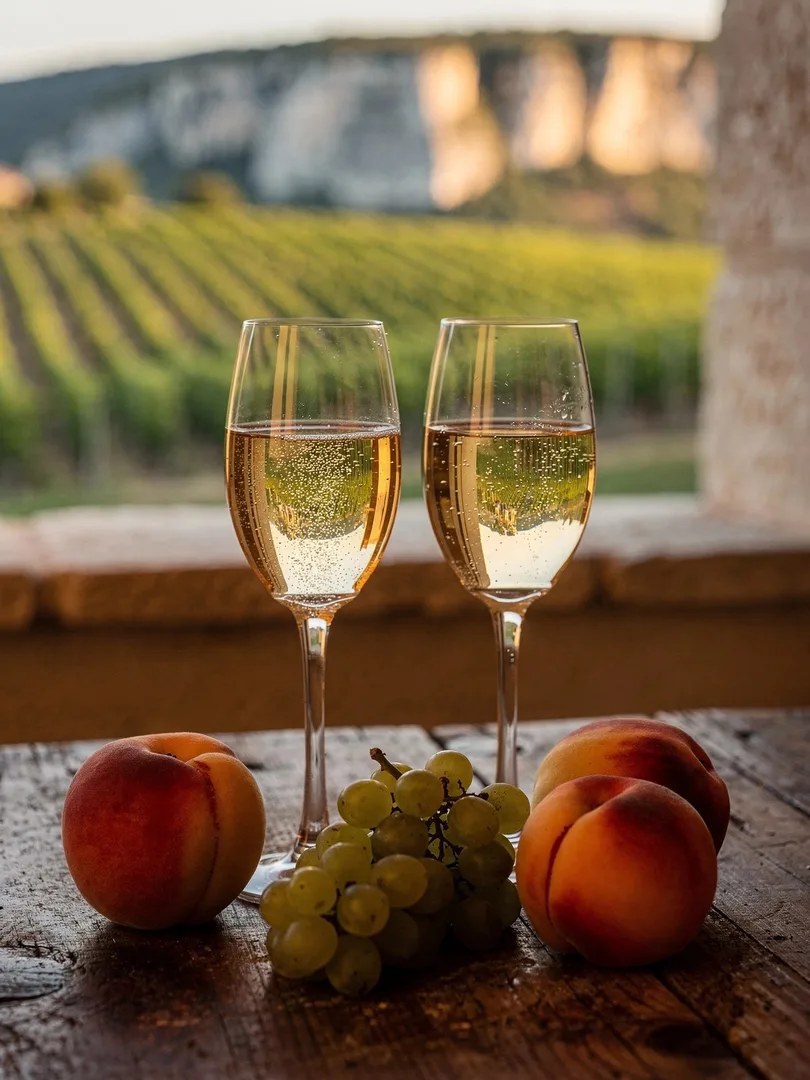
In the glass, Clairette de Die appears pale, with a fine bead of bubbles. The aroma recalls roses and citrus, layered with the fresh fruitiness of the Muscat grape. On the palate it's sweet yet light: with only seven to nine percent alcohol, the sweetness feels far less heavy than in a fortified wine.
Two names serve as tasting references. Jaillance, the valley's cooperative, bottles Clairette de Die. The Rhône producer Chapoutier also lists a Clairette de Die in its product sheets. Labels for the sweet style may carry the additional designation "méthode ancestrale"—that's how to recognize it.
Pour it into a tulip glass or a slender white wine glass. A wide bowl lets aroma and carbonation escape too quickly, and with a Muscat wine, much of the experience lies in the aroma. The tulip shape captures it, and the bubbles rise more slowly within it.
Served well-chilled, at around 6 to 8 degrees Celsius, it shows at its best. Warmer, the sweetness feels heavier; too cold, and the aroma closes up.
Open it slowly, since the bottle holds a pressure of at least three bar measured at 20 degrees Celsius. Hold it at an angle, loosen the wire cage, turn the bottle while holding the cork steady, and let the gas escape quietly. That way nothing foams over, and the fine bead of bubbles stays in the glass.
When tasting, pay attention to the finish: does the sweetness cling to the palate, or does it fade cleanly? In a well-made Muscat, what lingers at the end is the aroma of rose and citrus, not the sugar. The low alcohol content feels only mildly warming on the palate, letting the fruit take the lead.
Crémant de Die, by contrast, is a dry sparkling wine made from Clairette. Tasting both side by side reveals just how far sweetness, grape variety, and lees aging can pull apart wines from the very same place.