Early, Whole, Gentle
Base Wine & Blend
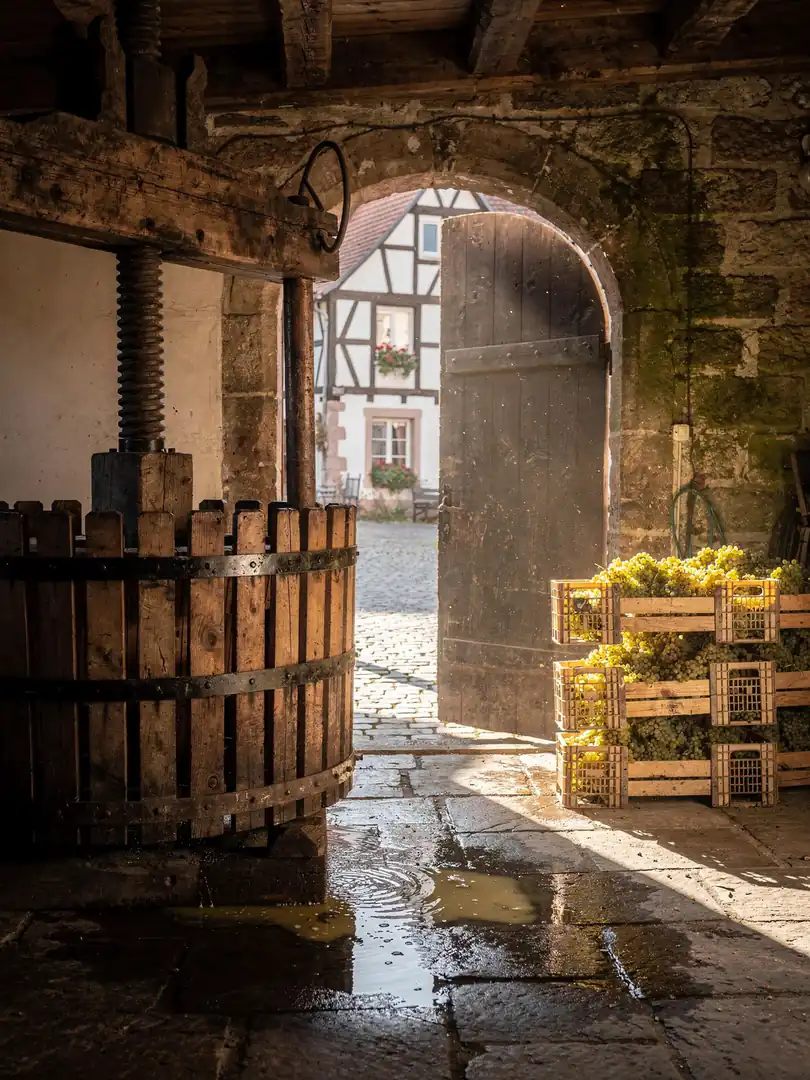
Crémant begins with the harvest, and here it's done by hand. EU regulations require this for every Crémant. The grapes arrive in small crates at the pressing hall, so that no berry bursts and no juice picks up color or tannin too soon. Picking often happens well ahead of the still-wine harvest, since acidity matters more than sugar.
Whole or destemmed grapes are pressed, yielding at most 100 liters of must from 150 kilograms of grapes. That's about two-thirds juice—enough for quality without extracting too much from the skins. The gentler the pressing, the paler and finer the must stays.
A white juice can be pressed from Pinot noir if it's done quickly with minimal skin contact. This produces Blanc de Noirs, which smells of red fruit yet appears pale in the glass. Blanc de Blancs comes from white varieties such as Pinot blanc, Auxerrois, and Riesling or Chardonnay.
Next comes the assemblage, the blending of base wines. Family houses blend varieties and parcels, while cooperatives assemble cuvées from the grapes of many growers. The goal is the same: a Crémant should taste recognizable year after year, so the blend often includes wine from previous harvests, known as reserve wines.
Anyone wondering what sets Crémant Rosé apart from a white Crémant will find the answer here: rosé is made entirely from Pinot noir, with the base wine getting its color from the skins. It therefore tastes of red fruit, with a touch more tannin in the background.